Ayurveda is the Natural healing system of Bharat (India). It creates awareness about the body, mind, sense organs, and soul, enabling individuals to live in harmony through self-knowledge and self-care. Ayurveda focuses on a healthy and happy life. According to Ayurveda, health is a state of uninterrupted physical, mental & spiritual well-being and fulfillment.
AYU Ayurvedic Bodyworks & Lifestyle
Healing Through Tradition & Touch
A quiet space for Ayurvedic Bodyworks, Lifestyle guidance and traditional wellness – Designed to reconnect the body, mind and daily life
For women seeking relaxation, self-care, rejuvenation and personal wellbeing
What is Ayurveda?
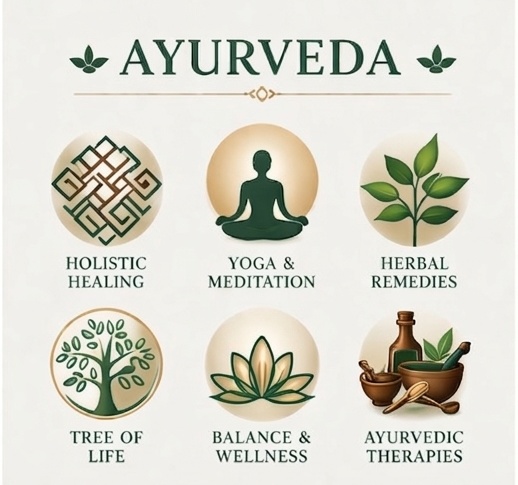
Ayurveda is the natural healing system of Bharat (India) — the knowledge about life, in six parts.
Ayurvedic Concepts
Ayurveda is the natural healing system of Bharat (India), derived from two Sanskrit words: Ayu — life (a combination of body, mind, sense organs and soul) — and Veda — knowledge. Ayurveda therefore means "the knowledge about life." It creates awareness of the body, mind, sense organs and soul, enabling individuals to live in harmony through self-knowledge and self-care, focused on a healthy and happy life. According to Ayurveda, health is a state of uninterrupted physical, mental and spiritual wellbeing and fulfilment.
Aim of Ayurveda. Ayurveda emphasises not only living a happy life, but one that contributes meaningfully to society. Its twin goals are relief from suffering for the ill, and preservation of health for the healthy. It helps individuals attain the four Purusharthas — Dharma (righteousness), Artha (prosperity), Kama (fulfilment of worldly desires) and Moksha (liberation). Dharma is the foundation: by following it, one rightly attains Artha and Kama, and eventually Moksha. All four depend on Ayu — life, sustained by good health.
Need of Ayurveda. Through Ayurveda we protect the body by consuming food with awareness of its properties (the body develops according to what we eat), by following healthy daily habits and honouring the body's natural urges rather than suppressing them. When food and habits are properly regulated, they result in strength, freshness, proper functioning of the sense organs and increased lifespan.
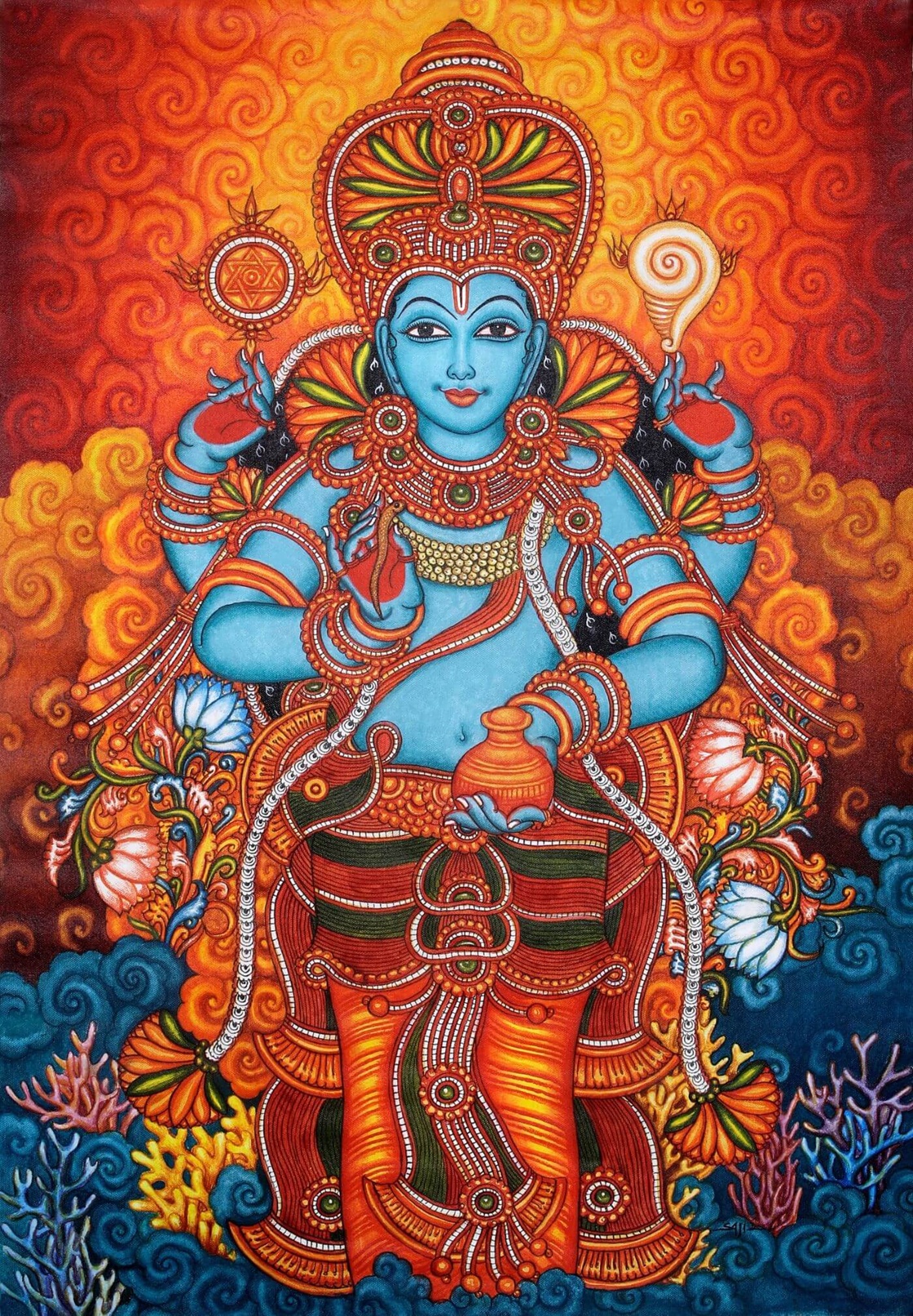
Origin. Ayurveda is believed to have been divinely revealed. As suffering increased on Earth, sages sought help from Lord Brahma, who passed the knowledge to Daksha Prajapati, then the Ashwini Kumars, then Indra — reaching sage-physicians Atreya & Bharadwaja (general medicine), Kashyapa (paediatrics) and Dhanwantari (surgery). Dhanwantari, the divine healer, is revered as the God of Ayurveda.
"Om Namo Bhagavate Vasudevaya, Dhanwantarye Amruthakalasha Hastaya, Sarvamaya Vinashaya, Trilokya Nadhaya, Bhagawate Namaha" — the Dhanwantari Mantra, traditionally chanted after bathing or before massage and healing therapies, in salutation to the destroyer of all diseases.
Unique Features of Ayurveda
- Free from toxicity — even materials that are toxic in raw form (such as mercury or sulphur) are always detoxified through traditional purification before use.
- For the diseased and the healthy alike — the same medicines and massages cure illness and boost immunity in someone already well.
- Open to other systems of medicine — Ayurveda readily accepts beneficial modern concepts, including lab investigations, X-rays and scans.
- Psychosomatic understanding — mind, body and soul are deeply connected; psychic factors can cause physical illness and physical ailments can affect the mind, so treating the mind can help cure the body.
- A variety of medicines — multiple options exist for a single disease, with the right one chosen for the patient's constitution (Prakriti).
- Close to nature — treatments are drawn from plants, metals, minerals and animal products, incorporating the five structural elements (Panchamahabhutas).
- Yoga as an integral part — yoga exercises both body and mind, improves flexibility and strength, and releases stress while Ayurveda restores hormonal balance.
Before prescribing treatment, an Ayurvedic physician weighs the cause of disease, its location, the patient's strength, the season, digestive fire (Agni), body constitution, age, mental strength, and diet and lifestyle. Diagnosis covers both patient (Darshana — inspection, Sparshana — palpation, Prashna — questioning) and disease (Nidana, Pragroopa, Lakshana, Upashaya/Anupashaya, Samprapti).
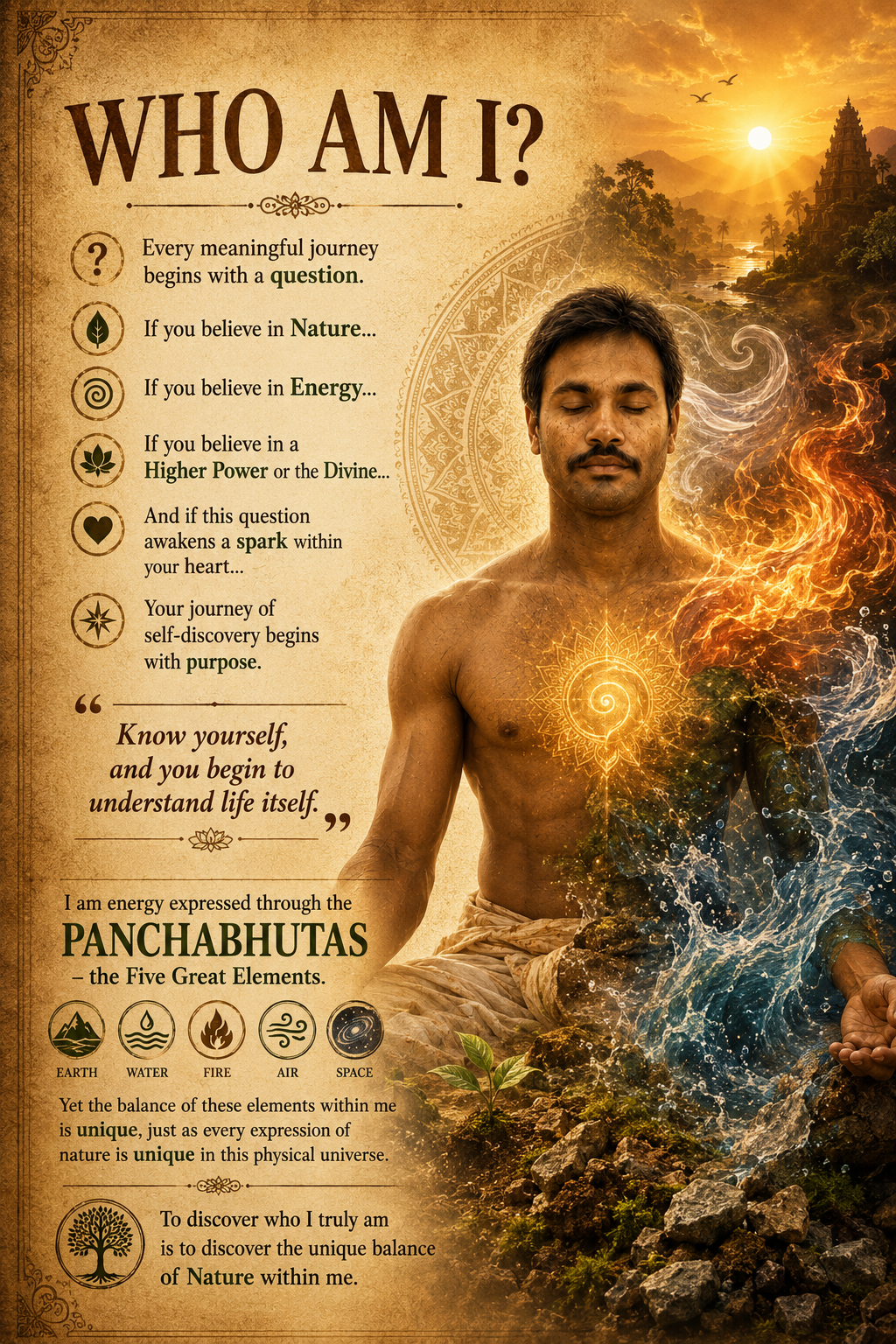
Pancha Mahabhuta — The Five Elements
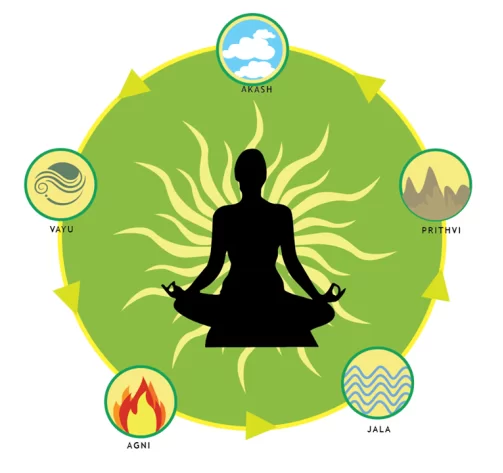
Pancha (five) Mahabhuta (the fundamental structural elements of the universe): Aakash (Space) — emptiness that allows movement and sound; Vayu (Air) — movement, motion and flow; Agni (Fire) — energy, transformation, heat and metabolism; Jala (Water) — fluidity, cohesion and connection; Prithvi (Earth) — solidity, stability and structure.
These five elements form the structural foundation of the human body — each person has a unique proportion of them, and this balance determines their constitution (Prakriti). In health, the Mahabhutas are in natural equilibrium; diet, environment, lifestyle, stress and habits can disturb this balance, and disease arises when the disturbance is significant. Each element is also linked to a sense organ and its perception — Aakash to the ear (sound), Vayu to skin (touch), Agni to the eyes (vision), Jala to the tongue (taste) and Prithvi to the nose (smell) — with each subsequent element building on the perceptions of those before it.
An Ayurvedic lifestyle preserves this equilibrium through a balanced diet suited to your doshas and elements, daily and seasonal routines (Dinacharya, Ritucharya), yoga and meditation, detoxification therapies such as Panchakarma, and natural herbs.
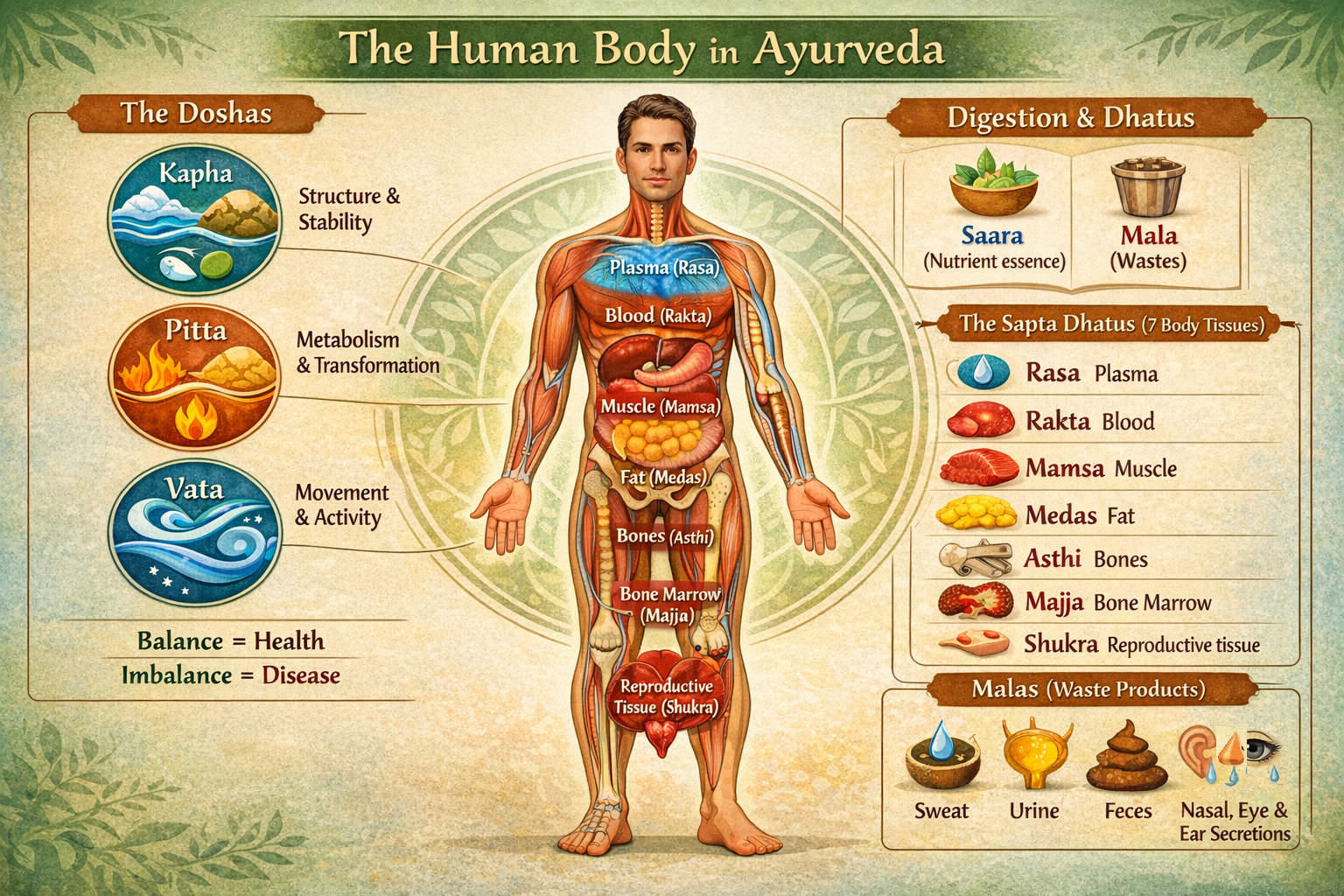
Tridosha — Vata, Pitta, Kapha
Tri (three) Doshas (that which causes functional effects in the body). While the Pancha Mahabhutas form the body's structure, the Tridoshas govern its function — Vata from Vayu + Aakash, Pitta dominated by Agni, and Kapha from Jala + Prithvi.
- Vata — movement & communication. Governs all movement, the nervous system, breathing, circulation and speech. Imbalance: pain, stiffness, shivering, insomnia, anxiety, hypertension.
- Pitta — transformation & metabolism. Governs digestion, metabolism, hormonal activity, body heat, hunger, vision and intellect. Imbalance: burning sensations, high fever, jaundice, acidity, bleeding disorders, skin disease.
- Kapha — structure & stability. Provides structure, lubrication and cohesion; supports strength, stamina and patience. Imbalance: lethargy, weight gain, excess mucus, weak digestion.
Each dosha exists in three states — equilibrium (health and harmony), aggravation (hyper-function and disease), or diminution (hypo-function and weakness). In balance, the Tridoshas support health, longevity, strength, immunity and radiant vitality; imbalanced, they become the root of disease. Understanding your own dosha constitution and maintaining its balance through diet, lifestyle, herbs, seasonal routines and Ayurvedic therapies is central to holistic wellbeing.
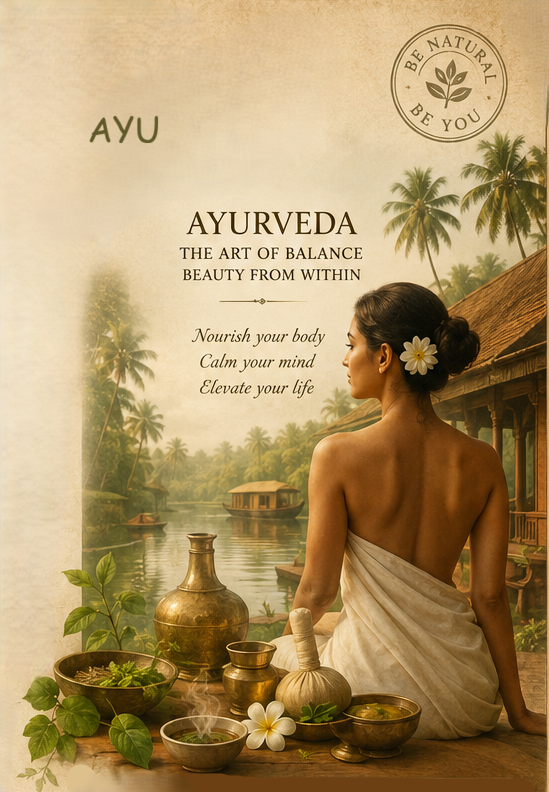
Deha Prakriti — Body Constitution
Deha means body; Prakriti means nature, temperament or constitution. Every body is governed by the three Doshas, with one or two typically dominant — this is your Prakriti, formed at conception and influenced by the dominant dosha in sperm and ovum, the nature of the uterus, the season and place of conception, and the mother's diet and lifestyle. It stays fixed for life, though it can move in and out of balance.
Seven types: the single-dosha types — Vata (nervous, quick, energetic), Pitta (bilious, intelligent, intense) and Kapha (phlegmatic, calm, stable) — are rare on their own; the dual-dosha types — Vata-Pitta, Vata-Kapha and Kapha-Pitta — are the most common; and the balanced, tridoshic Sama Prakriti is the ideal, and rarest of all.
Knowing your Prakriti isn't a diagnosis of disease — it's a prevention and personalisation tool. A Vata-dominant person following a Vata-aggravating lifestyle is more likely to develop Vata-related issues like anxiety or joint pain; understanding this in advance lets diet, routine and therapy be tailored to keep you in balance. This assessment — of body frame, skin, digestion, sleep, stress response, energy and temperament — is the foundation of every AYU consultation.
The Ayurvedic Healing Process (AHP)
A holistic approach to promoting health, preventing disease and treating illness by balancing body, mind and spirit — in two phases.
Phase 1 — Understanding your Deha Prakriti. Assessing your unique constitution to understand your health status and susceptibility to disease, aligned with Nidan Parivarjana — identifying the causative factors of disease (Nidana: doshic imbalance, lifestyle, diet, environment) and avoiding or removing them (Parivarjana). This phase is primarily preventive — promoting awareness of your constitution, guiding lifestyle and diet, and preventing disease before it manifests.
Phase 2 — Treatment (Chikitsa). Once your constitution is understood, treatment is tailored to the disease stage:
- Shamana Chikitsa (palliative) — for early or mild imbalance, or a weak, elderly or very young patient. Pacifies the doshas gently through diet, yoga, chanting and meditation, Ayurvedic bodyworks such as Abhyanga, and herbal remedies.
- Shodhana Chikitsa (purification) — for advanced or chronic conditions, where doshas are severely vitiated and body channels (Srotas) are blocked with toxins (Ama). Panchakarma, the fivefold detoxification process, cleanses through Vamana (therapeutic emesis), Virechana (purgation), Vasti (medicated enema), Nasya (nasal administration) and Rakta Moksha (bloodletting).
Panchakarma is also used purely for rejuvenation in people who are already healthy — enhancing organ function, improving metabolic efficiency and promoting overall vitality.
About Me
Sreenivasa Rao Vemuri is a Certified Ayurvedic Bodywork Practitioner (School of Ayurveda & Panchakarma, STED Council, Kannur, Kerala), holding an MBA (Andhra University), M.Phil (Madurai Kamaraj University) and a Diploma in Advanced Management (AIMA, New Delhi). Alongside his Ayurvedic bodywork practice, he is a business professional with a background spanning marketing, finance, education and consulting — and currently runs a private company in education, finance & accounting, and audit services.
His own day begins at 4:30 AM and runs through to 10 PM, including yoga, meditation, chanting, gym, cycling, swimming, dance and daily Ayurvedic self-care — the same disciplined routine (Dinacharya) that AYU's lifestyle guidance is built around. His own Deha Prakriti is Pitta & Kapha.
"At AYU, traditional Ayurvedic knowledge meets thoughtful touch and conscious living — looking beyond a single symptom to how nourishment, routine, rest and awareness shape the experience of health, rooted in your own Deha Prakriti."
About AYU Ayurvedic Bodyworks & Lifestyle
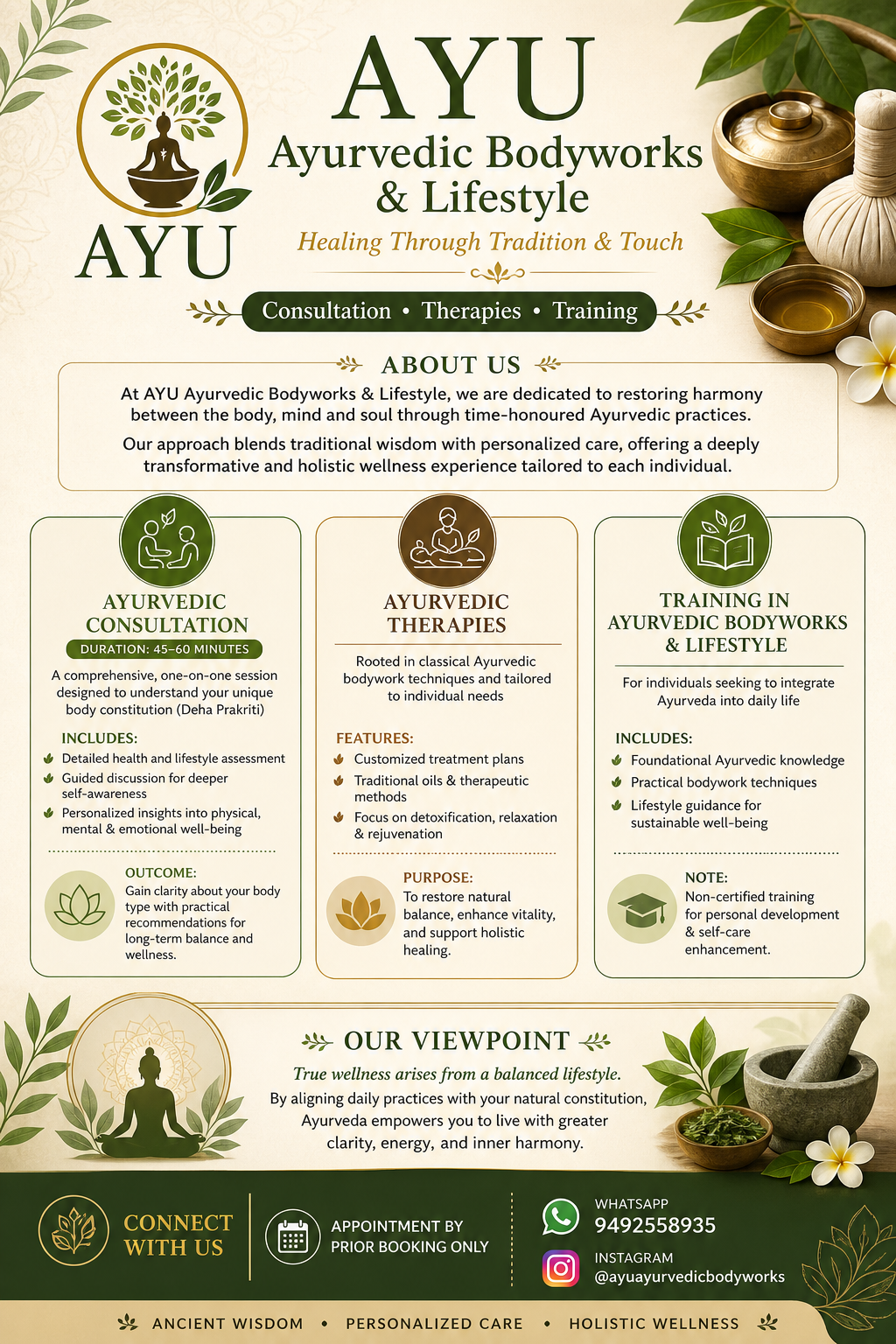
AYU blends traditional Ayurvedic wisdom with personalised care for a genuinely holistic wellness experience — built around three pillars: Consultation (understanding your Deha Prakriti and current state of balance), Ayurvedic Bodyworks (therapeutic touch through six traditional therapies) and Ayurvedic Lifestyle (daily routine, sleep, diet, exercise and mental discipline suited to your constitution).
Every recommendation rests on Ayurveda's four pillars — Aushadha (medication), Ahara (diet), Vihara (lifestyle) and Achara (conduct) — working together toward one goal: restoring and maintaining the natural balance of your Tridosha.
AYU AB & AL Overview
Consultation, Ayurvedic Bodyworks and Ayurvedic Lifestyle — the three pillars AYU is built around.
Ayurvedic Bodyworks
Ayurvedic Bodyworks (AB) is an ancient healing system that originated in Bharat (India). It is based on the principles of Ayurveda, a natural and holistic approach to health that encompasses the mind, body and soul. Ayurvedic Bodyworks (AB) is a traditional form of body therapy that uses therapeutic oils, herbs and specific massage techniques to balance the body's energy and promote healing.
Ayurvedic Lifestyle
Ayurvedic Lifestyle (AL) offers a traditional approach to modern living, emphasising natural practices and holistic wellbeing in everyday life. It focuses on how we can connect with nature for better living, and what we can do for a healthy and happy life. Ayurvedic Lifestyle (AL) is the most suitable approach for providing appropriate solutions by considering your Daily Routine, Physical Activities, Sleep Habits, Mental Discipline, Emotional Balance and Social Conduct, and more. In Ayurvedic terminology, Ayurvedic Lifestyle (AL) focuses on Deha Prakriti (body constitution) and Manas Prakriti (psychological constitution).
Both AB and AL follow the four fundamental pillars of Ayurveda — Aushadha (medication / herbal support), Ahara (diet & nutrition), Vihara (lifestyle & daily practices) and Achara (behaviour, ethics & conduct).
Ultimate Goal
To restore and maintain the natural balance of the Tridosha: Vata — movement & nervous system, Pitta — metabolism & digestion, Kapha — structure & stability.
Through a balanced integration of Bodywork and Lifestyle, AYU helps you achieve natural healing, inner harmony and long-term wellness.
Ayurvedic Consultation
Every AYU journey starts with understanding you — your body, your habits and your rhythm — before any therapy or lifestyle guidance is offered.
Know Your Deha Prakriti · Understand Your Body · Live in Balance
A Personalised Approach to Health & Wellbeing
A comprehensive, one-on-one session designed to understand your unique body constitution (Deha Prakriti).
How Is It Different from Other Consultations?
Ayurveda views every individual as unique. The balance and expression of the Pancha Mahabhutas (Five Elements) within each person are distinct, resulting in a unique body constitution (Deha Prakriti). Rather than focusing only on symptoms, an Ayurvedic consultation aims to understand the whole person — body, mind, lifestyle, habits, daily routine and overall wellbeing.
What Is Assessed During an Ayurvedic Consultation?
Deha Prakriti (Body Constitution) — understanding your natural body constitution: Vata, Pitta, Kapha or combination types.
Benefits of knowing your Deha Prakriti:
- Better understanding of your body's strengths and vulnerabilities
- More appropriate food and lifestyle choices
- Improved self-awareness
- Support for preventive healthcare
- Personalised wellness strategies
- Vikriti (current imbalance) — identifying the present imbalance that may be contributing to discomfort or illness.
- Agni (digestive & metabolic strength) — assessment of digestion, metabolism, appetite and assimilation.
- Ahara (dietary habits) — evaluation of food choices, eating patterns and nutritional suitability.
- Vihara (lifestyle) — assessment of daily routines, work patterns, sleep, exercise and habits.
- Manas (mental & emotional wellbeing) — understanding stress levels, emotional health, mental balance and behavioural patterns (Achara).
- Nidra (sleep) — evaluation of sleep quality, duration and disturbances.
- Mala & Mutra — assessment of bowel and urinary functions, which provide important clues about overall health.
How Is Ayurvedic Consultation Different?
- Individualised Approach — two people with the same condition may receive different recommendations based on their constitution and imbalance.
- Focus on Root Cause — rather than addressing symptoms alone, Ayurveda seeks to identify and address underlying causes.
- Holistic Assessment — physical, mental, emotional, dietary and lifestyle factors are considered together.
- Prevention-Oriented — Ayurveda emphasises maintaining health and preventing disease before it develops.
Lifestyle-Based Recommendations may include:
- Diet modifications
- Daily routine adjustments (Dinacharya)
- Yoga and exercise recommendations
- Meditation and relaxation practices
- Ayurvedic therapies and bodyworks
- Herbal support when appropriate
- Seasonal lifestyle guidance (Ritucharya)
Ayurvedic Perspective
According to Ayurveda, health is not merely the absence of disease. True health is a state of balance in body, mind, senses and spirit, enabling an individual to live with vitality, clarity and wellbeing.
Consultation Outcome
After consultation, recommendations may include:
- Understanding your Deha Prakriti
- Personalised diet guidance
- Lifestyle recommendations
- Ayurvedic therapies and bodyworks
- Seasonal health advice
- Wellness and preventive care strategies
- Personalised understanding of your strengths and vulnerabilities
Ayurvedic Bodyworks
Traditional therapies using oils, therapeutic touch and time-honoured Ayurvedic practices in a calm, private setting.
Ayurvedic Bodyworks focuses on therapeutic body treatments using medicated oils, herbal formulations and specialised massage techniques. These therapies help balance body energies, improve circulation, detoxify tissues and promote overall healing.
Abhyanga (Body Massage)
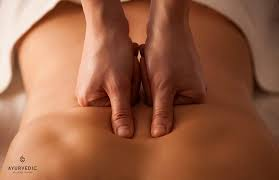
Abhyanga is a traditional Ayurvedic therapy in which the body is anointed and massaged with herbal oils. Ayurveda recommends that all healthy individuals (Swastha) — and those wishing to maintain good health and longevity — regularly apply oil to the body, especially the head, inside of the ears, palms and soles.
Before application — the body is gently cleansed with warm water and a soft cloth, and dried before oil is applied. Application — the chosen oil is warmed to a comfortable temperature and applied evenly, massaged with circular motions on the joints and long, upward strokes on the limbs and torso. Duration — a professional massage runs 45–60 minutes, daily for 7–14–21 days depending on the treatment plan; self-massage needs only 15–30 minutes for good absorption. After — the oil is left to penetrate for 45–60 minutes before a warm-water bath.
Benefits: enhances longevity and reduces wrinkles, strengthens body tissues (Dhatus) and improves vitality, promotes sound and restful sleep, supports flexibility and circulation, and helps calm the mind and balance the doshas.
Mukha Abhyanga (Face Massage)
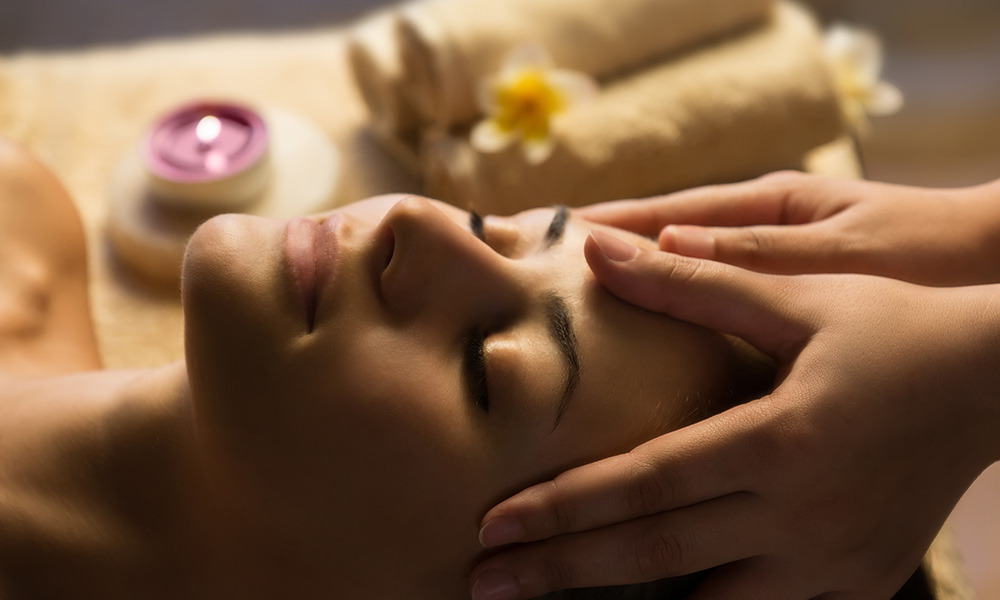
A traditional Ayurvedic facial massage that involves applying herbal oil or Lepana (herbal paste) to the face, followed by gentle massage — rejuvenating facial tissues, improving blood circulation and enhancing the skin's natural glow.
Application — the face is gently cleansed with rose water and cotton, then the chosen oil, Lepana or cream is applied evenly over the face and neck and massaged with circular, upward fingertip strokes for 30–45 minutes, taken gently around the eyes and lips. After — the oil or cream is left to absorb for 15–25 minutes, then wiped or washed off with lukewarm water and, if needed, a mild herbal water or gram-flour paste.
Benefits: improves skin texture and complexion, reduces wrinkles and dryness, enhances glow and softness, and calms the mind and promotes relaxation.
Shiro Abhyanga (Head Massage)
The head is the most important organ of the body, as all the sense organs are located within it — Shiro Abhyanga nourishes these organs and promotes their natural, healthy functioning, using an Ayurvedic oil chosen for your dosha and therapeutic needs.
Application — the scalp is gently massaged with fingertips in circular movements for 30–45 minutes. After — the oil is left on the scalp for 45 minutes to 1 hour before washing with lukewarm or normal water (never hot, which can weaken the eyes and hair roots), removing excess oil with herbal powders such as chickpea or green gram powder, or a mild herbal shampoo.
Benefits: supports hair growth and reduces hair fall, eases stress, anxiety and scalp tension, and promotes deep, restful sleep.
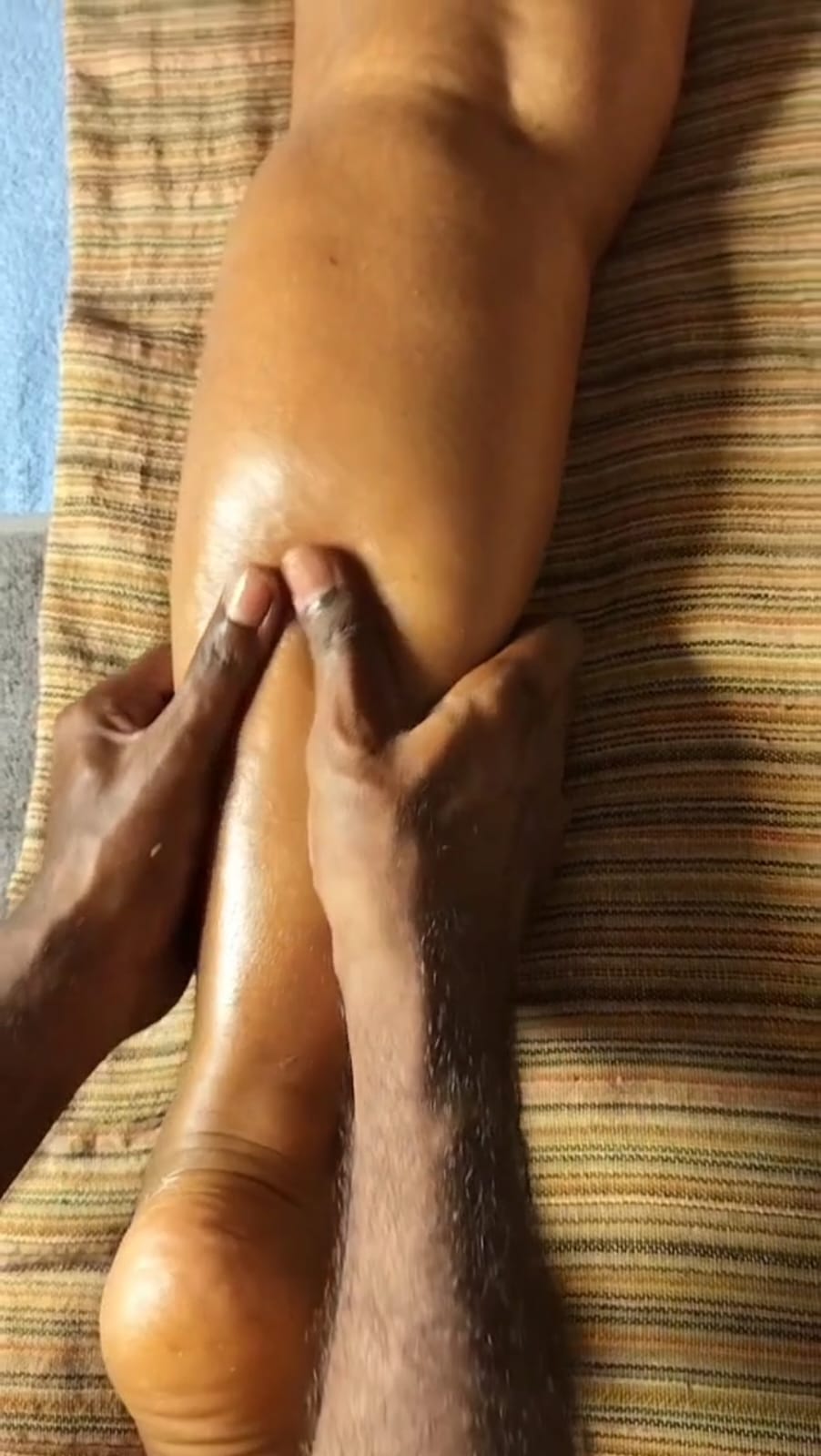
Padabhyanga (Foot & Leg Massage)
The legs are the foundation of the body — providing stability for standing, support for body weight and movement, and power and control for precise, grounded technique. The leg bones act as levers for muscle movement, joints such as the knees and ankles provide mobility, and the calf muscles aid circulation through a muscular pump mechanism that helps return blood to the heart.
Performed in two phases: Phase 1 — Cleansing, with warm water and Epsom salt to comfortably warm the feet and legs before the massage; Phase 2 — Massage, with oil chosen for your Prakruti.
Benefits: promotes relaxation, relieves muscular tension and reduces stress, promotes a sense of calm and grounding, supports healthy circulation, improves comfort after prolonged standing, and encourages restful sleep. Padabhyanga is more than a foot massage — it's a traditional Ayurvedic practice of caring for the foundation of the body.
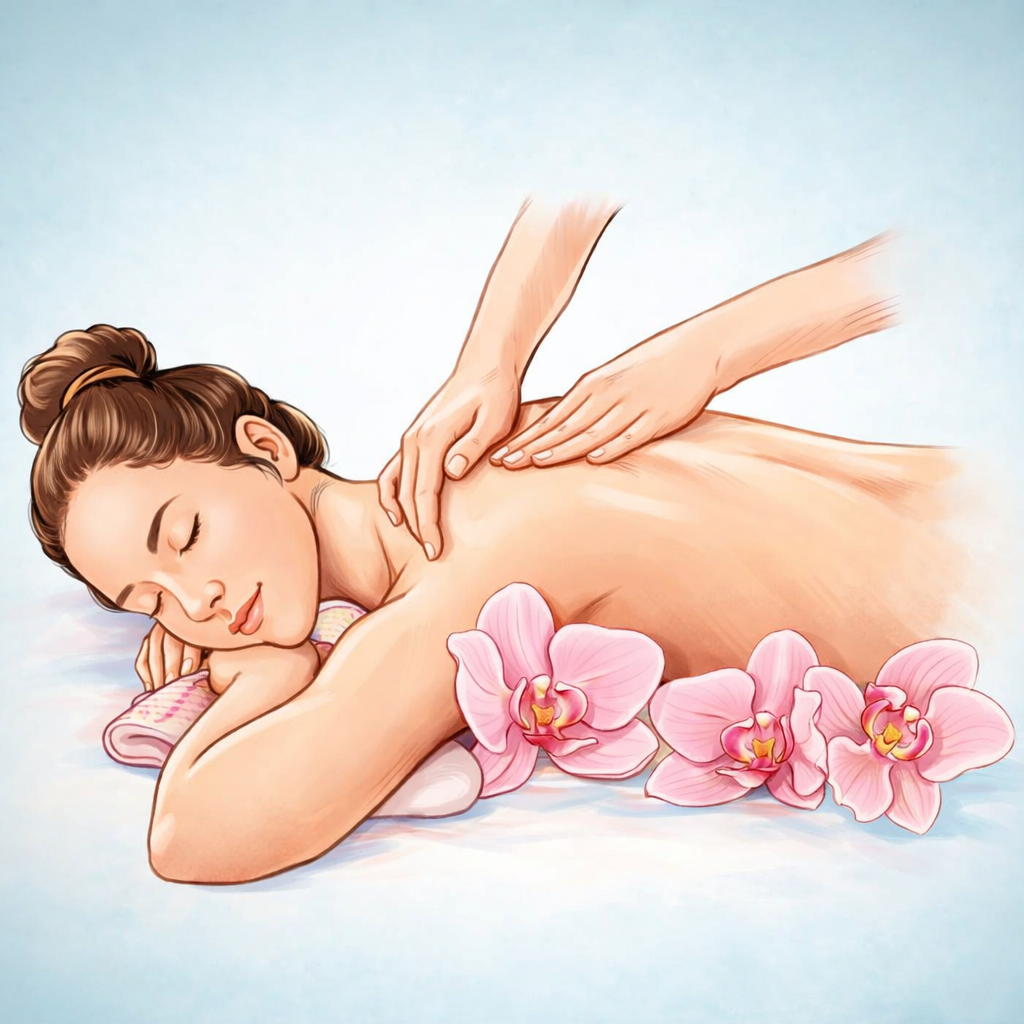
Back Massage
Targeted bodywork for the back, combining therapeutic oil application and attentive massage to ease muscular tension and support spinal comfort — restoring flexibility and relaxation through the body's structural core, with the oil chosen for your dosha and current condition.
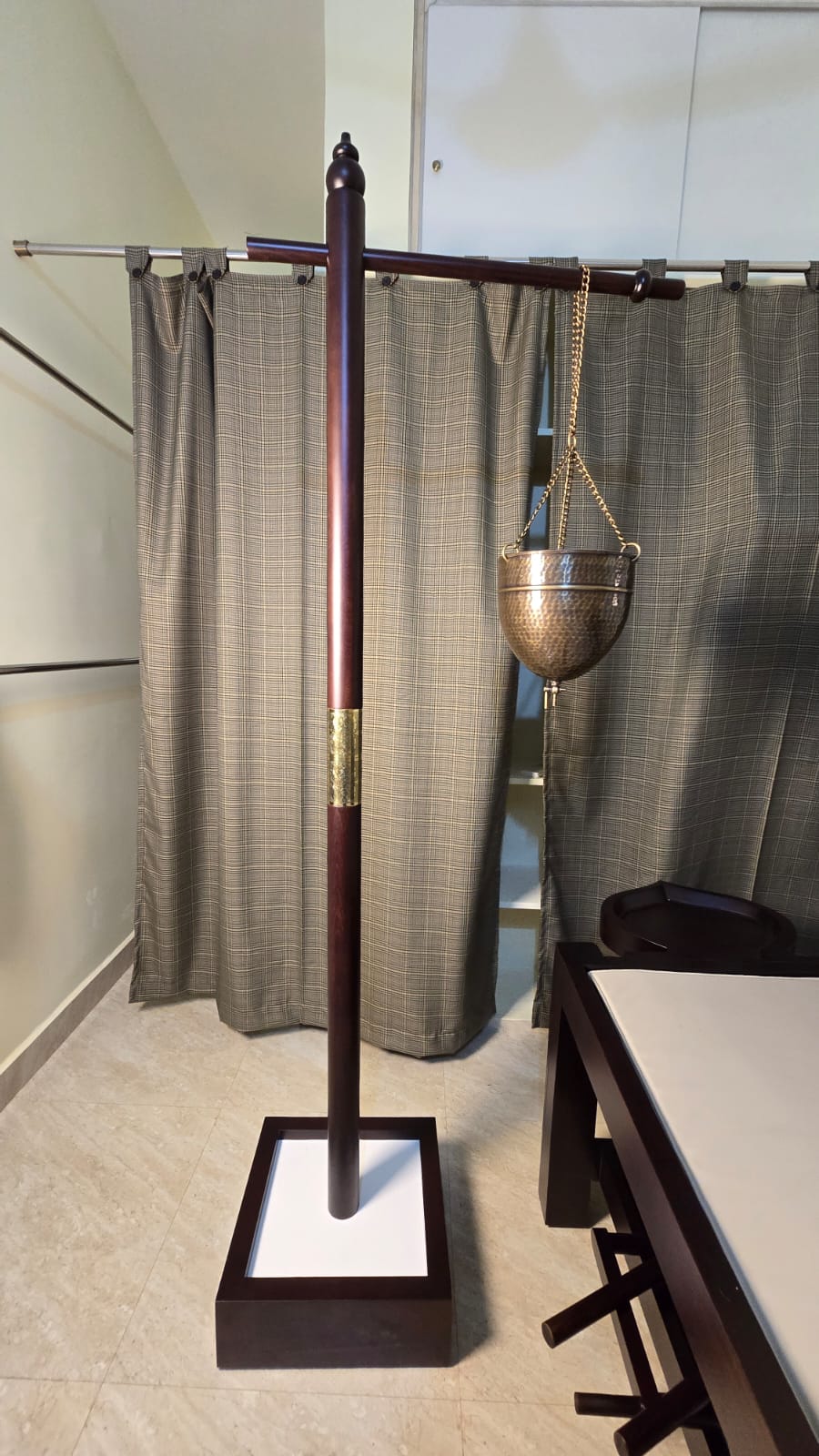
Shirah Seka (Shirodhara)
A classical Ayurvedic therapy for deep relaxation and rejuvenation, in which a continuous stream of medicated oil, milk or buttermilk is gently poured over the forehead — Shiras (head) + Seka/Dhara (continuous flow) — to calm the mind and nourish the nervous system. Three types are used: Thaila Dhara (warm medicated oil), Ksheera Dhara (medicated milk) and Thakra Dhara (medicated buttermilk).
Usually performed for 60–90 minutes daily over 7–14 days, depending on the condition — best in the morning or evening, in a calm and relaxed environment, using around 2 litres of medicated liquid. Light food is preferred beforehand; afterward, take adequate rest, avoid cold wind, direct sunlight or dust, and follow your practitioner's dietary and lifestyle advice.
Benefits: promotes deep relaxation and mental calmness, improves sleep quality, rejuvenates body and mind, enhances the functioning of the sense organs, supports healthy immune response, and provides a soothing, cooling effect. The type of Dhara and medicated liquid used is selected based on your Prakriti, dosha imbalance and health condition after consultation.
Service Locations
Choose an in-person session at our Kavali space, or a doorstep session for our elite members.
In-Person — Kavali
Available services:
- Shiro Abhyanga (Head Massage)
- Mukha Abhyanga (Face Massage)
- Abhyanga (Body Massage) — Full / Upper / Lower Body
Pre-booking: By prior appointment only
Doorstep Services
Exclusively for female elite members
Service type: Abhyanga (Body Massage) — Full / Upper / Lower Body
Locations covered: Chennai, Bangalore, Hyderabad, Vijayawada, Nellore, Ongole, Tirupathi
Pre-booking: By prior appointment only
DM / Call for details →Ayurvedic Lifestyle
Ayurvedic Lifestyle focuses on understanding your unique body and mind constitution, enabling a personalised and sustainable way of living.
Core Areas Covered
- Deha Prakriti Physical Body Constitution
- Manas Prakriti Mental & Emotional Nature
- Dinacharya Daily Routine
- Sleep Patterns Improving Rest & Recovery
- Eating Habits Personalised Diet Guidance
- Physical Activities Suitable Exercise Planning
- Mental Discipline Mindfulness & Emotional Balance
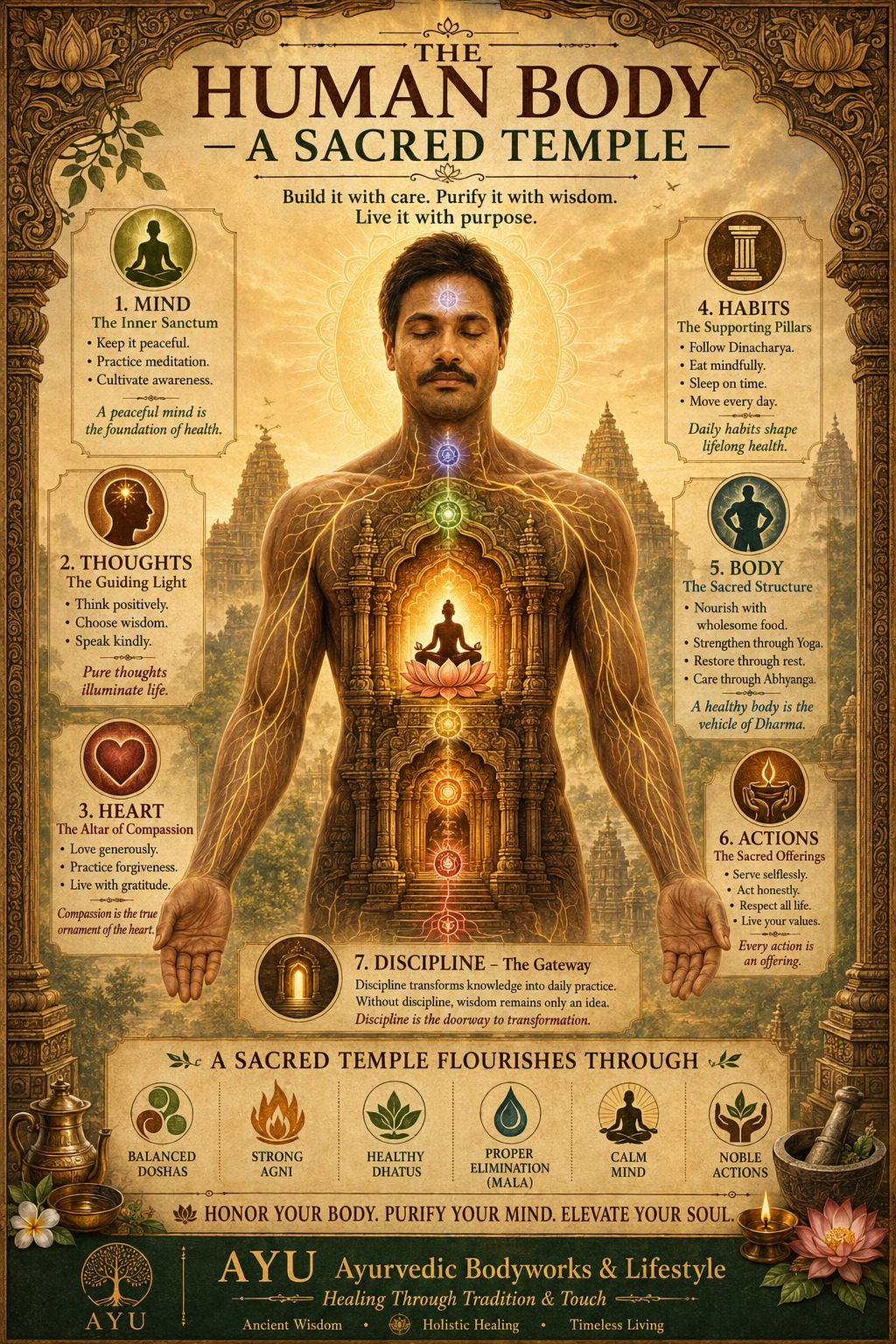
"Right food, at the right time, in the right quantity, with the right awareness — becomes nourishment."AYU Ayurvedic Lifestyle
Training at AYU
Small-batch learning for those who want to understand and practise Ayurvedic bodyworks and lifestyle principles.
Learn. Practise. Integrate.
Designed for individuals seeking to integrate Ayurvedic wisdom into their daily lives — training combines foundational knowledge of Ayurvedic principles, practical bodywork technique and lifestyle guidance for sustainable wellbeing, in an intimate batch environment.
- Ayurvedic Bodyworks 100 Hours
- Ayurvedic Lifestyle 50 Hours
- Batch Size 5–6 Participants
Non-certified training, intended for personal development and self-care enhancement.
"We believe true wellness arises from a balanced lifestyle. By aligning daily practices with your natural body constitution, Ayurveda empowers you to live with greater clarity, energy and inner harmony."
Training Enquiry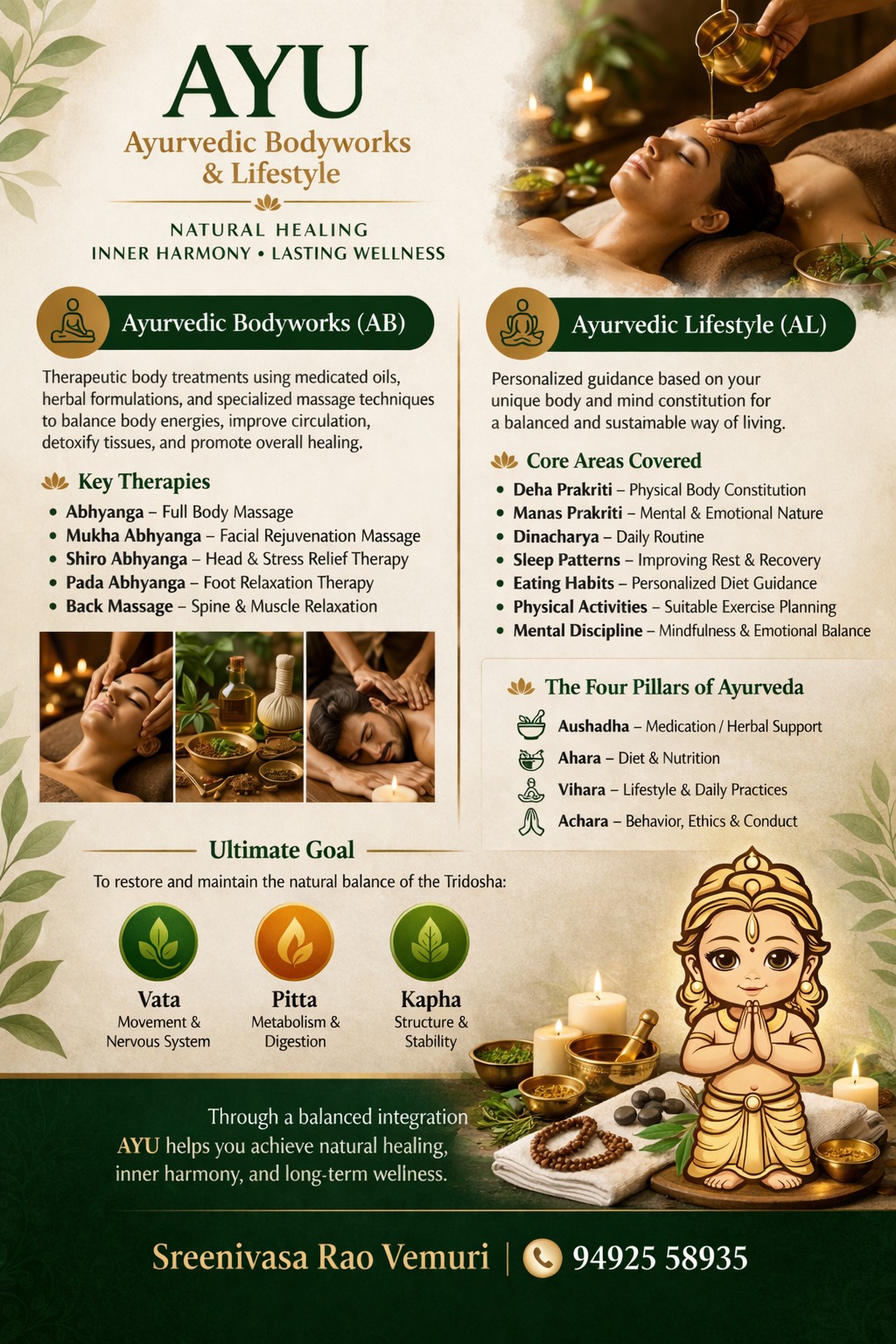
Gallery
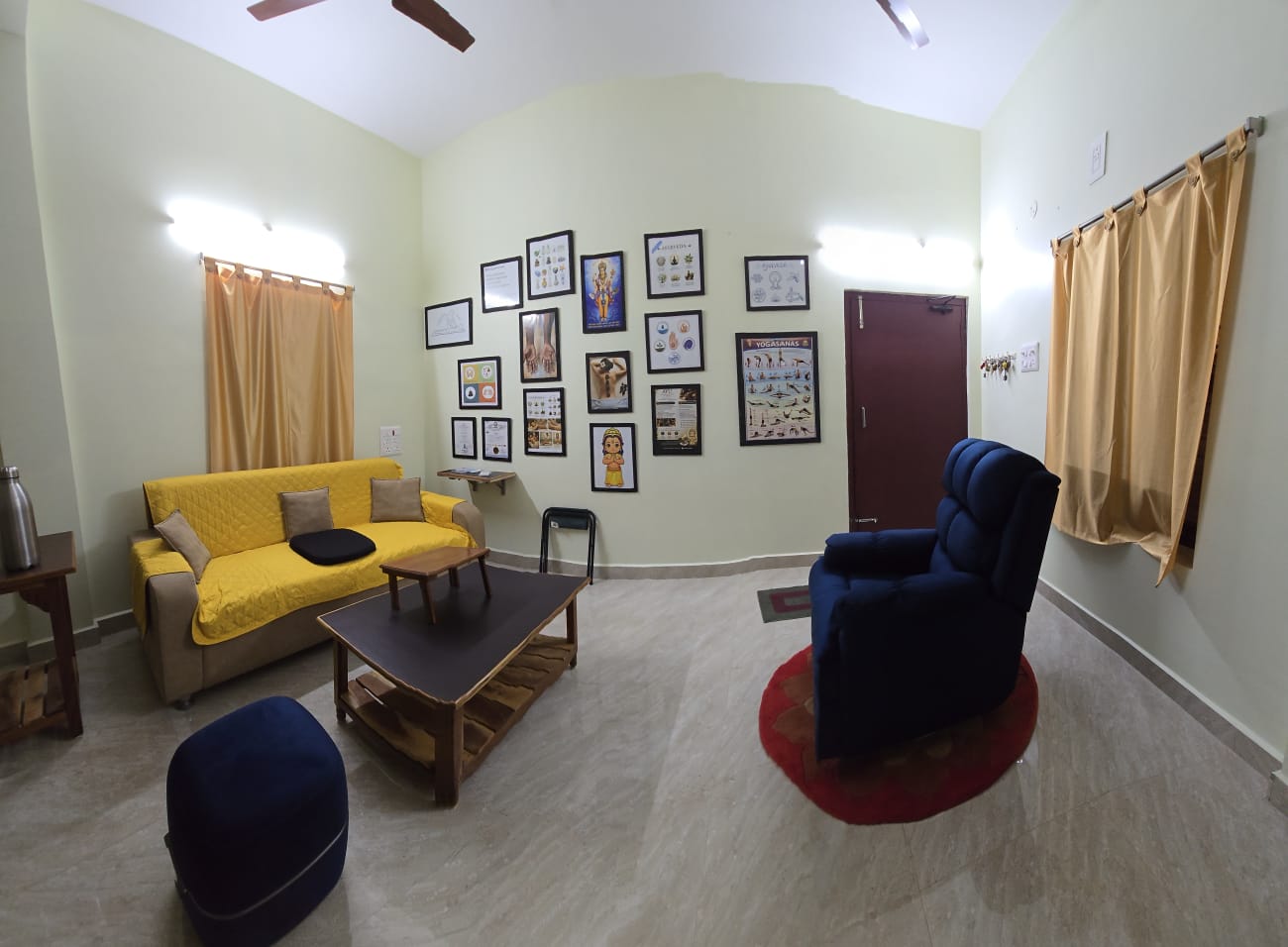
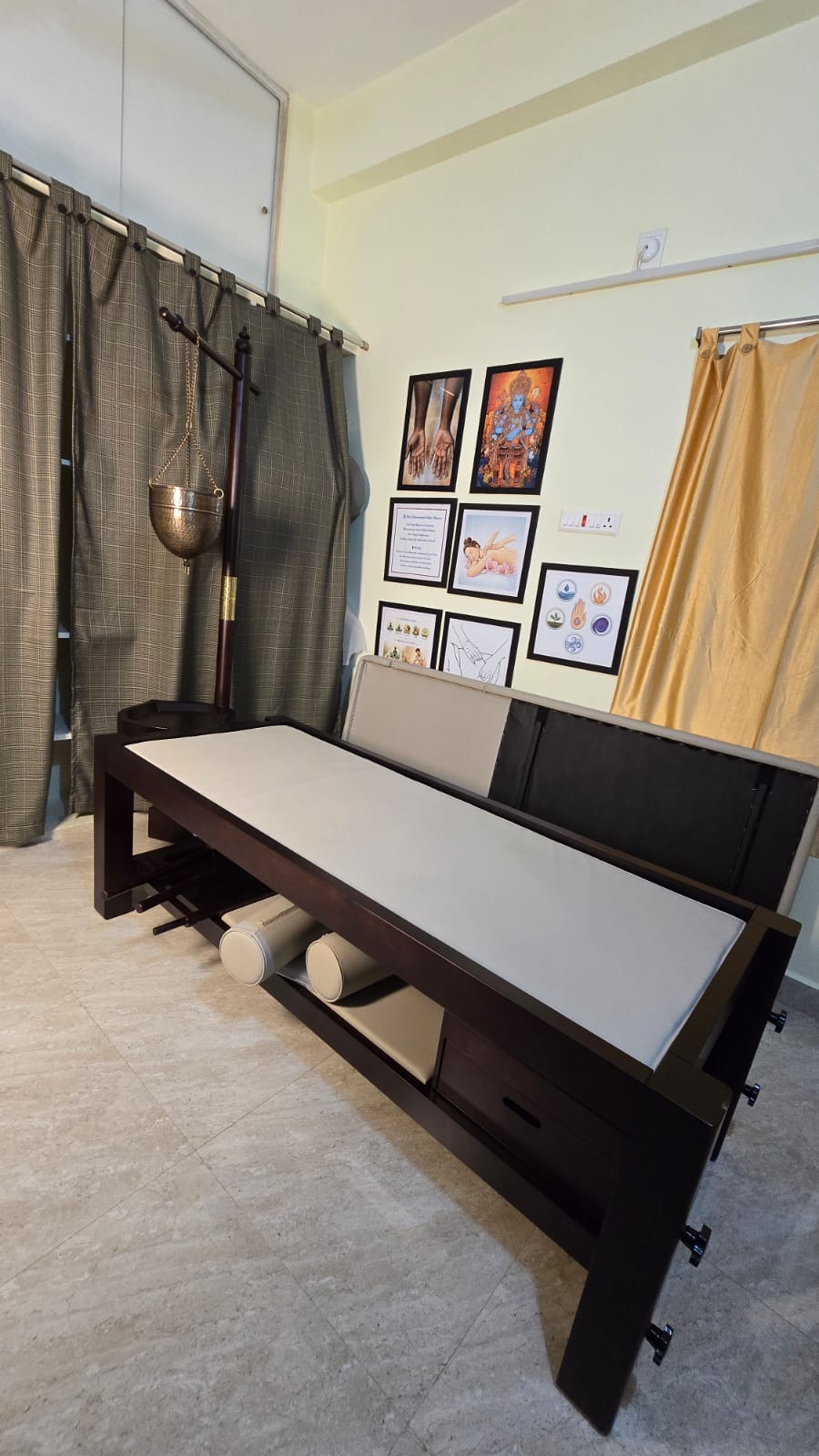
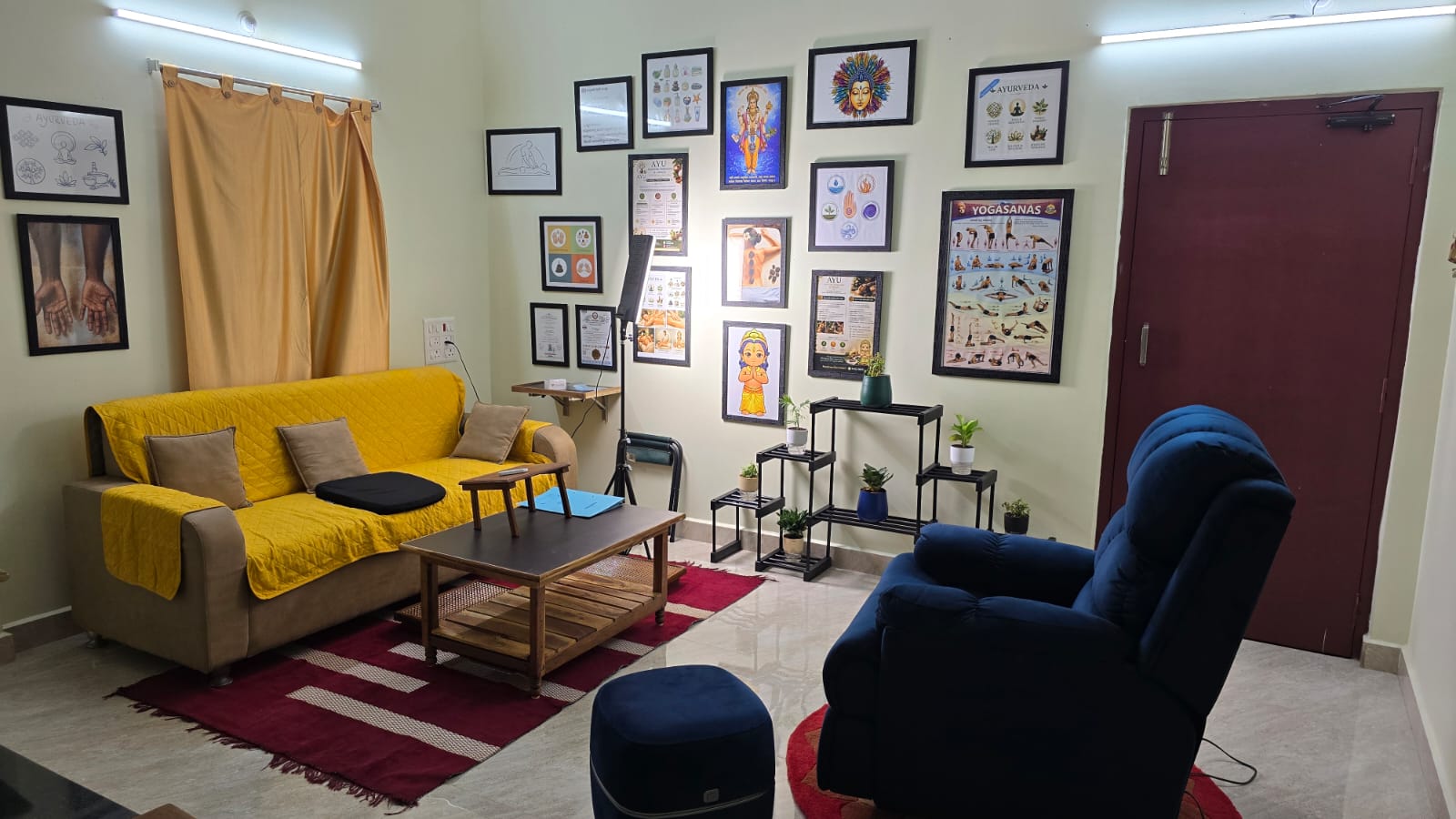
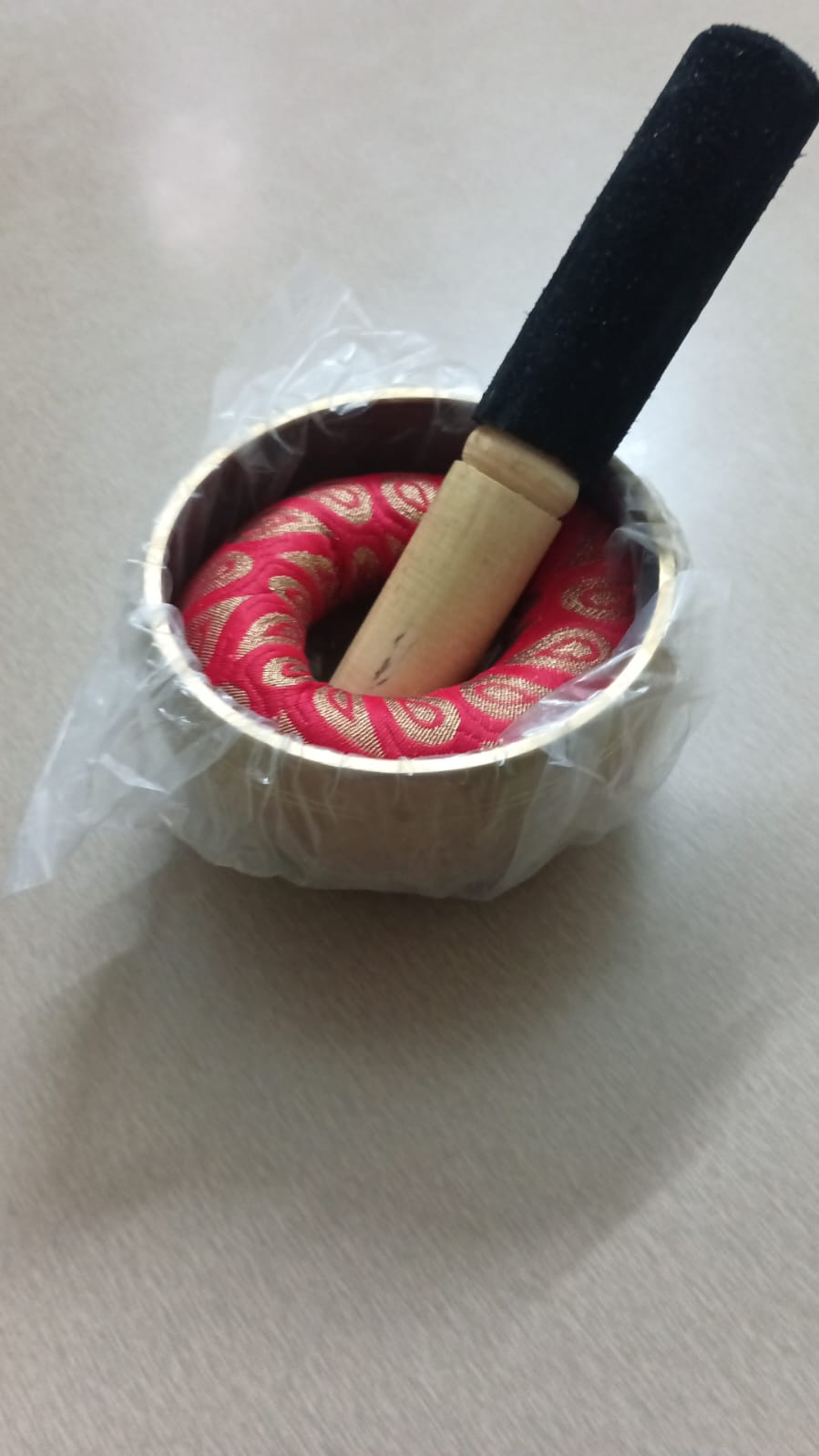
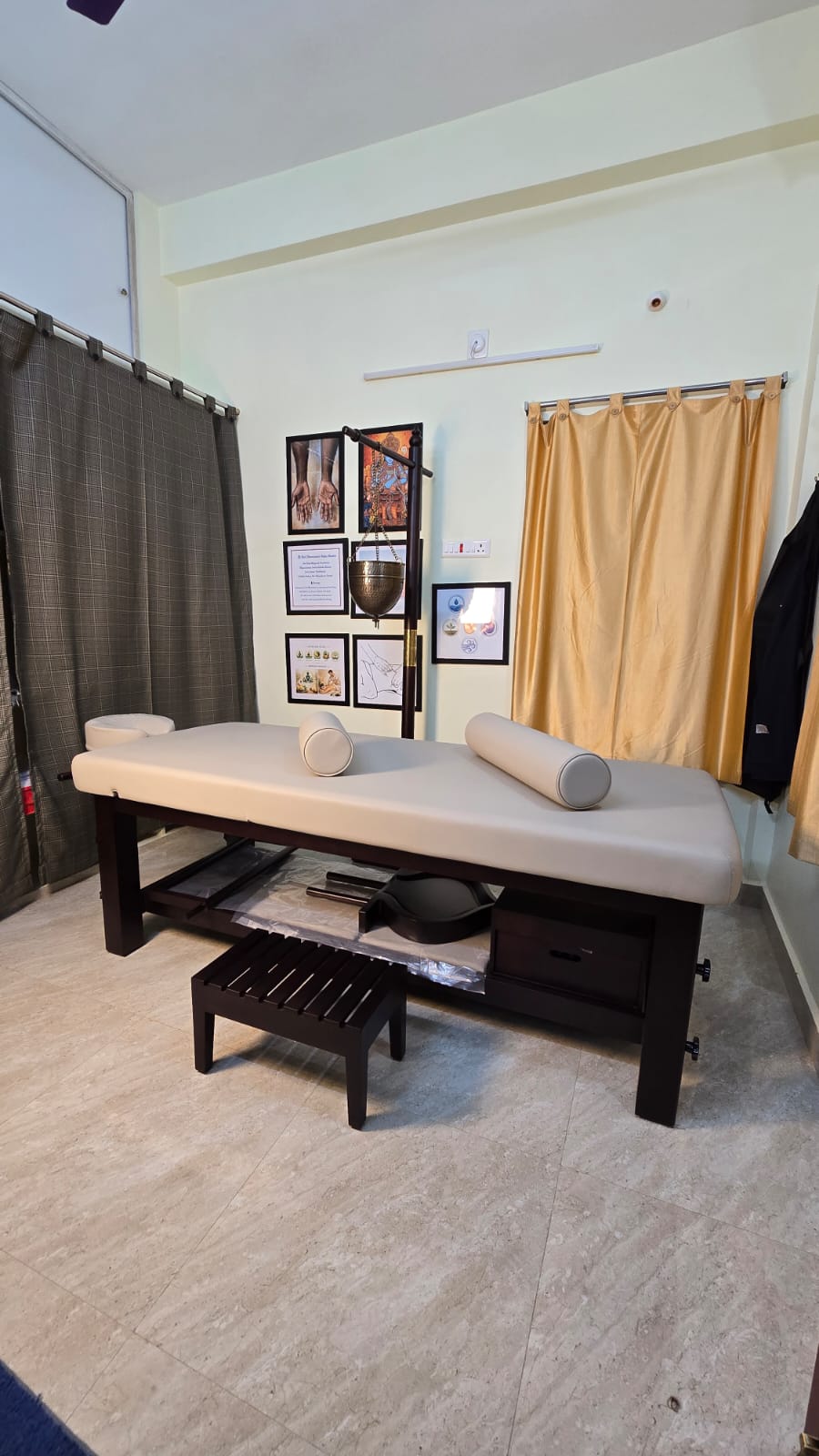
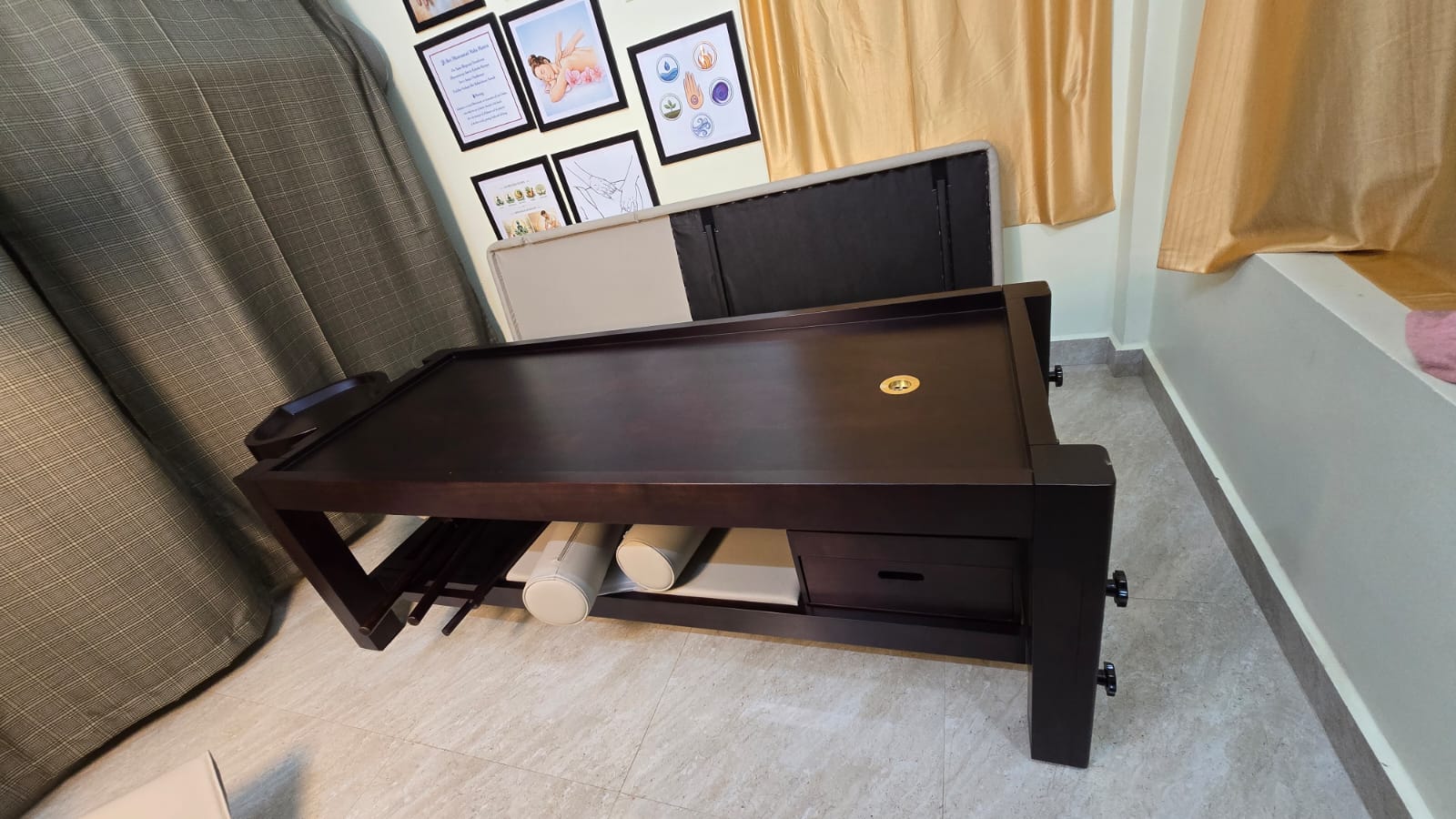
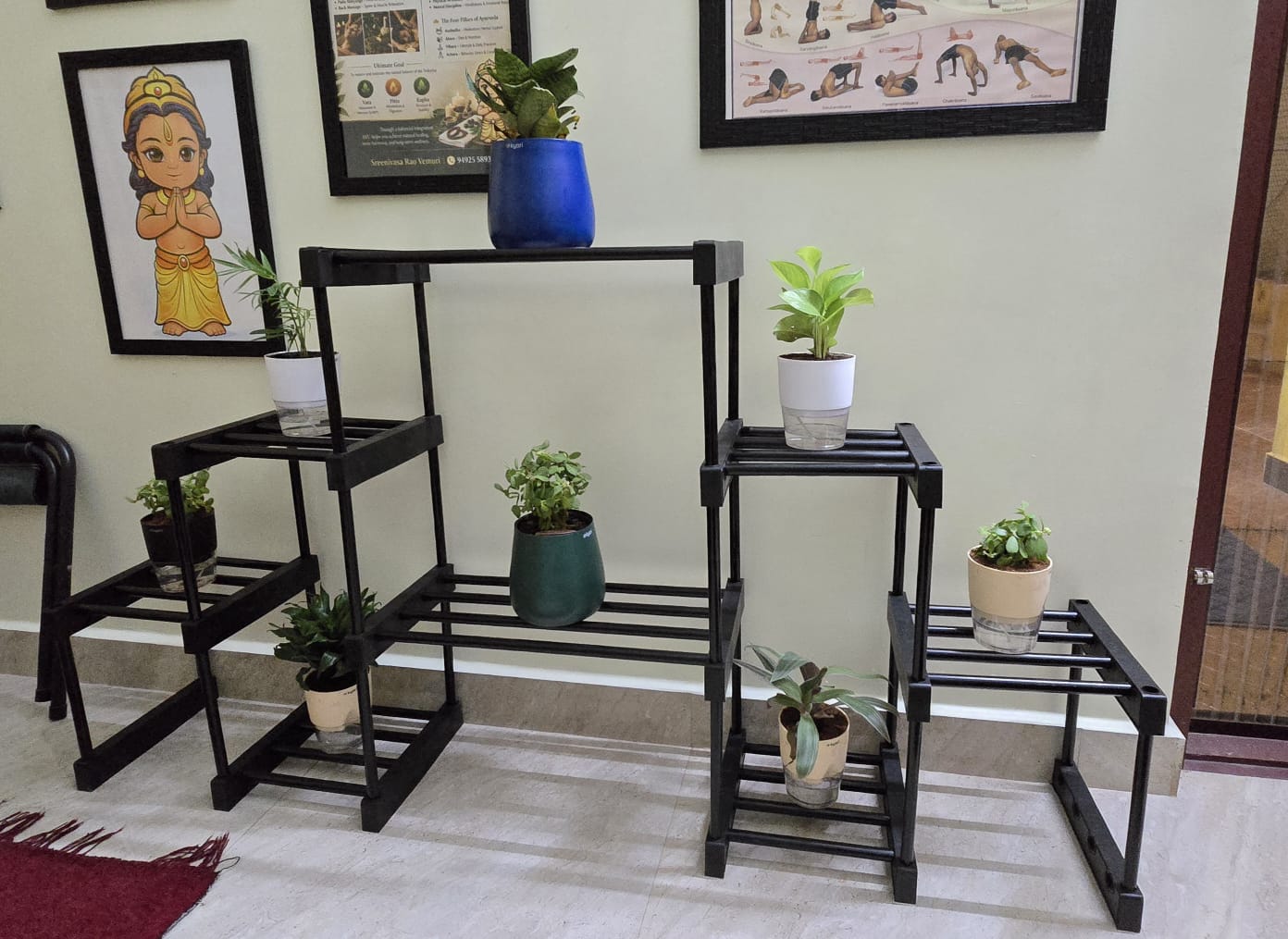
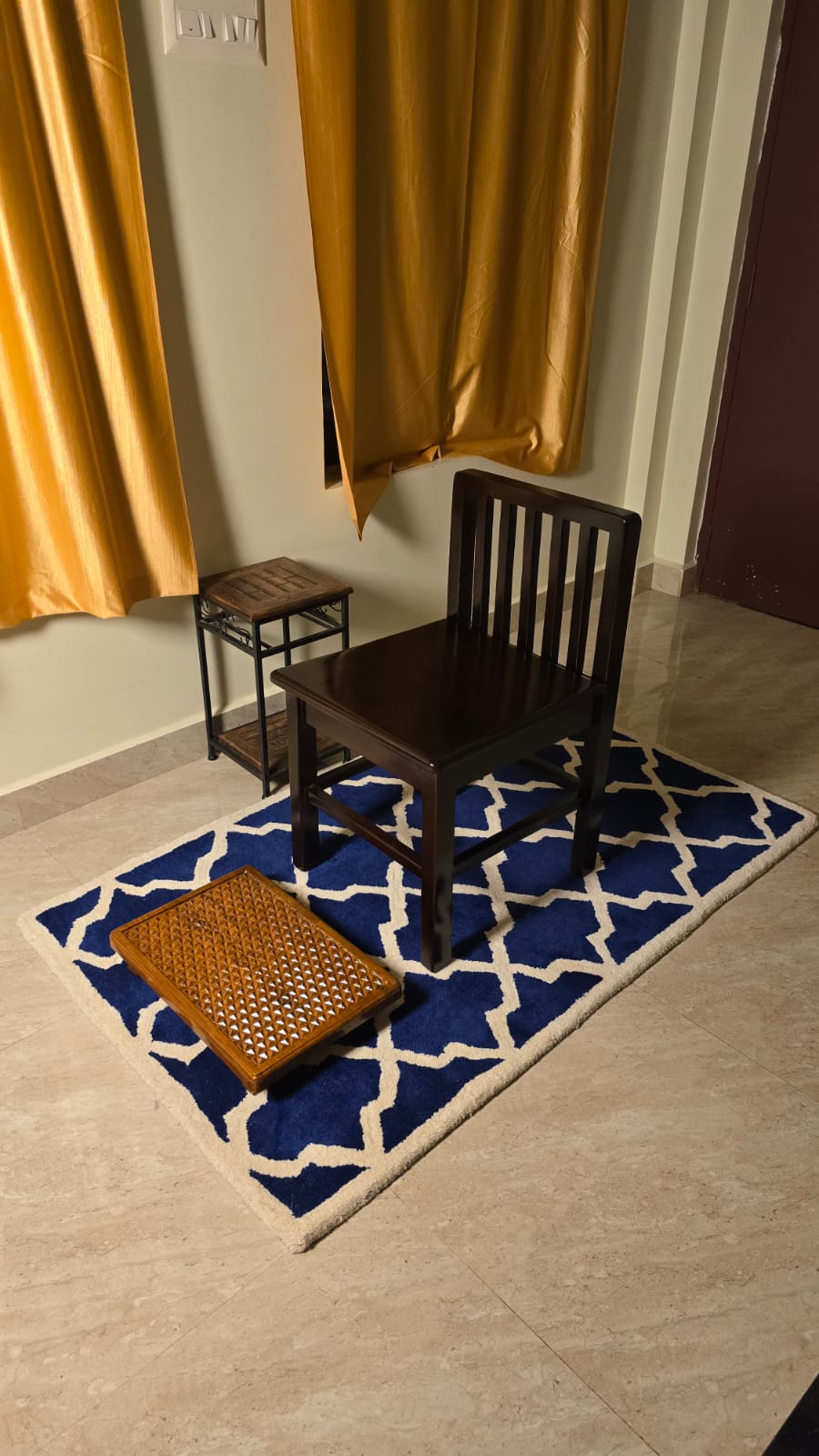
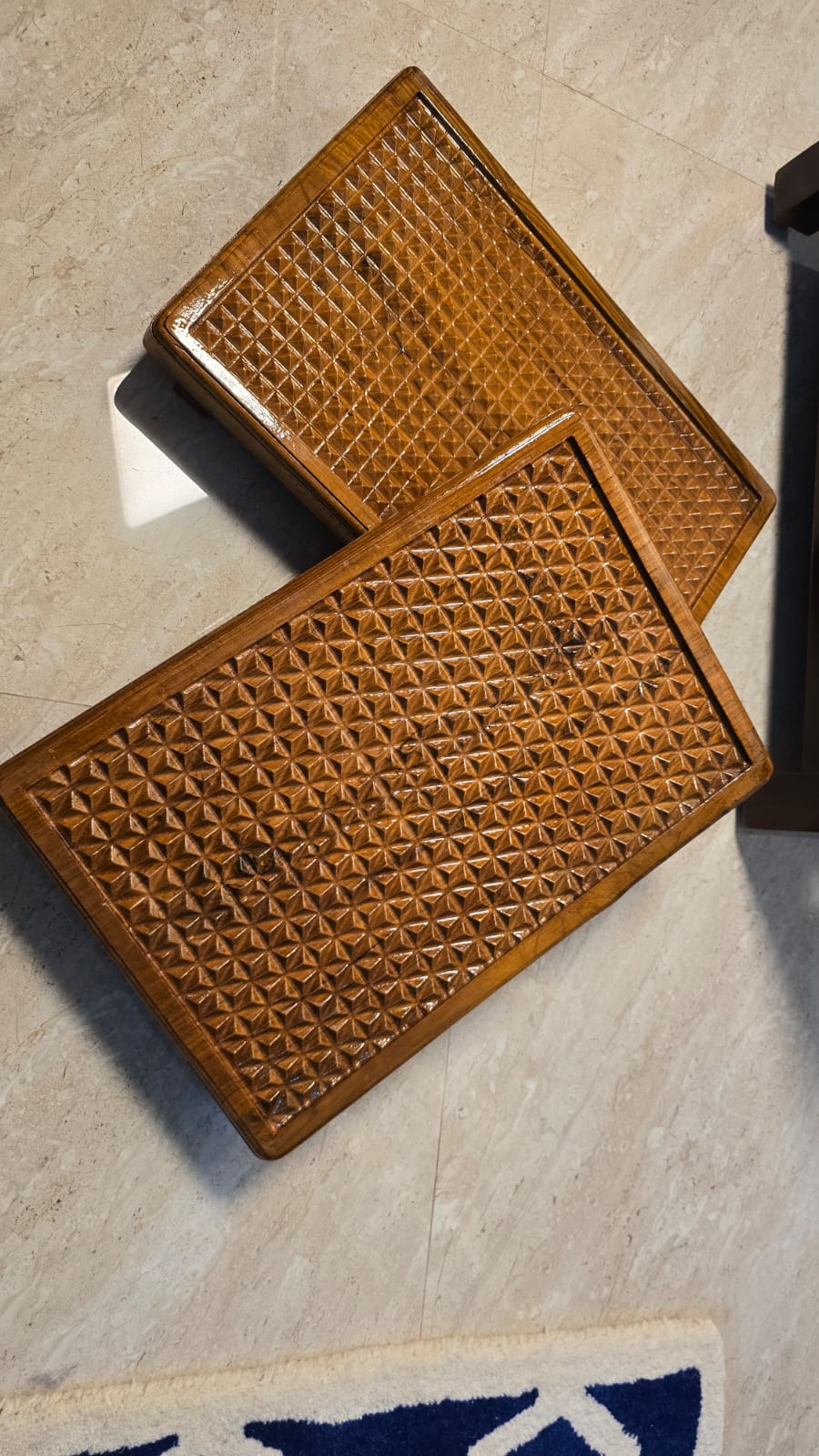
The AYU therapy space, tools and setting — a calm, private environment for every session.

Ayurvedic Medication
Traditionally well-tolerated preparations, drawn from plants, oils and minerals, chosen according to your Deha Prakriti.

Ayurvedic Medicine
Ayurvedic medicines are rooted in centuries of traditional practice — generally well-tolerated and, when properly prepared, free from toxicity and harmful side effects. Ayurveda draws on natural elements such as sunlight, air, water, mud, medicinal oils, animal milk and a wide range of plants as sources of healing.
Prevention is better than cure. A core principle of Ayurveda is preventive care — strengthening the immune system to enhance the body's natural resistance to disease. Ayurvedic medicine can be used proactively to balance the body's doshas (Vata, Pitta and Kapha), helping maintain health and vitality.
Individualised, based on your Deha Prakriti. Each person has a unique body constitution, so treatment is customised — for the same condition, different medicines may be prescribed depending on body type, age, lifestyle and the specific nature of the imbalance.
Common forms include Arishtas & Asavas (fermented herbal infusions for digestion and vitality), Kashayam (herbal decoctions), Thailam (medicated oils), Ghritha (medicated ghee), Lehya (herbal pastes and tonics), Lepam (external pastes), Choorna (powders), pills/tablets and Rasayana (rejuvenating formulations). Non-herbal components — minerals and detoxified metals — undergo a purification process called Shodhana to eliminate toxicity and enhance therapeutic efficacy.
Ayurvedic Oils for Body
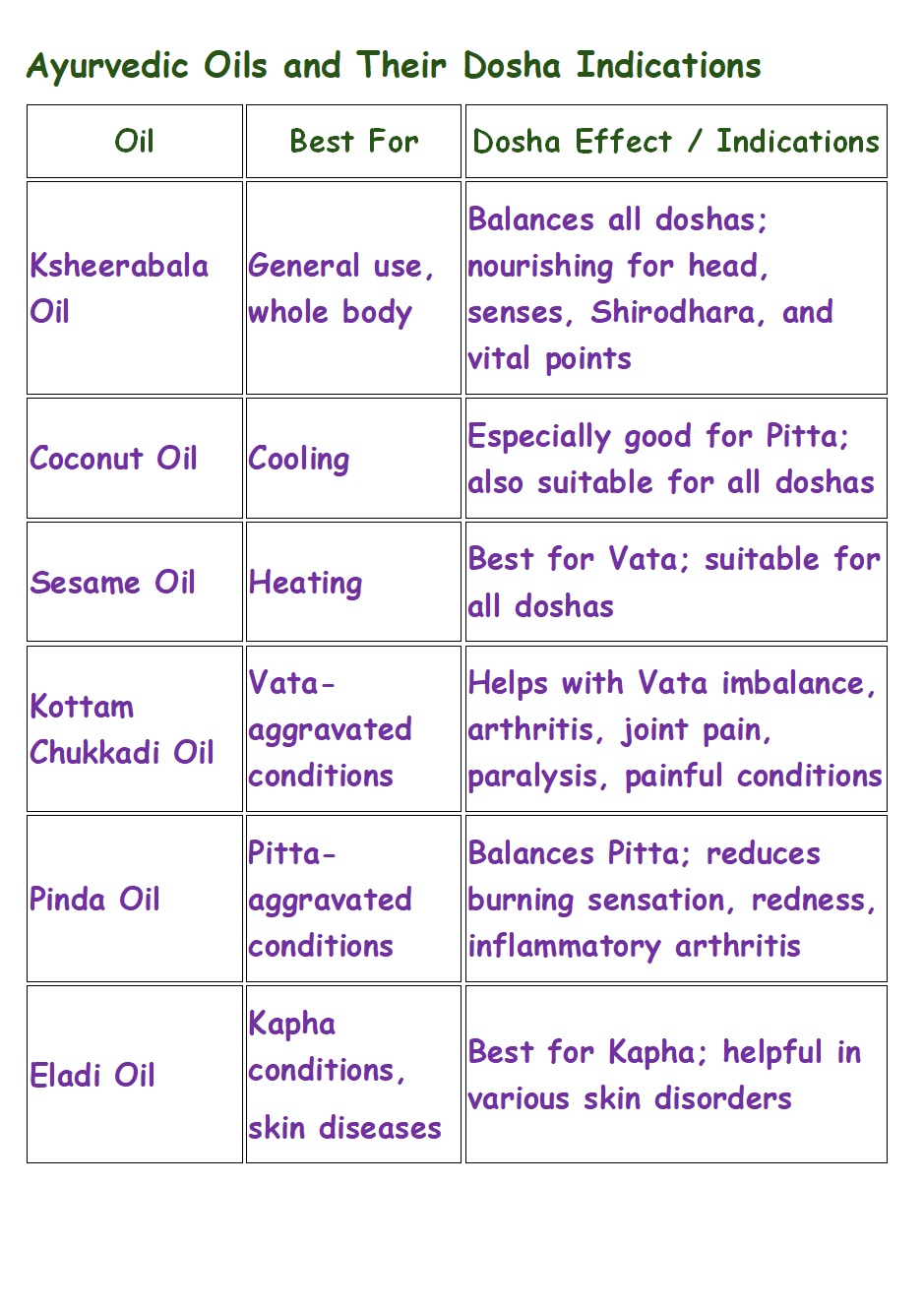
The oil chosen for full-body Abhyanga is matched to your constitution and current imbalance:
- Ksheerabala Oil — general use, whole body; balances all doshas, nourishing for head, senses and vital points.
- Coconut Oil — cooling; especially good for Pitta, also suitable for all doshas.
- Sesame Oil — heating; best for Vata, suitable for all doshas.
- Kottam Chukkadi Oil — for Vata-aggravated conditions: arthritis, joint pain, paralysis, painful conditions.
- Pinda Oil — for Pitta-aggravated conditions: burning sensation, redness, inflammatory arthritis.
- Eladi Oil — for Kapha conditions and skin diseases.
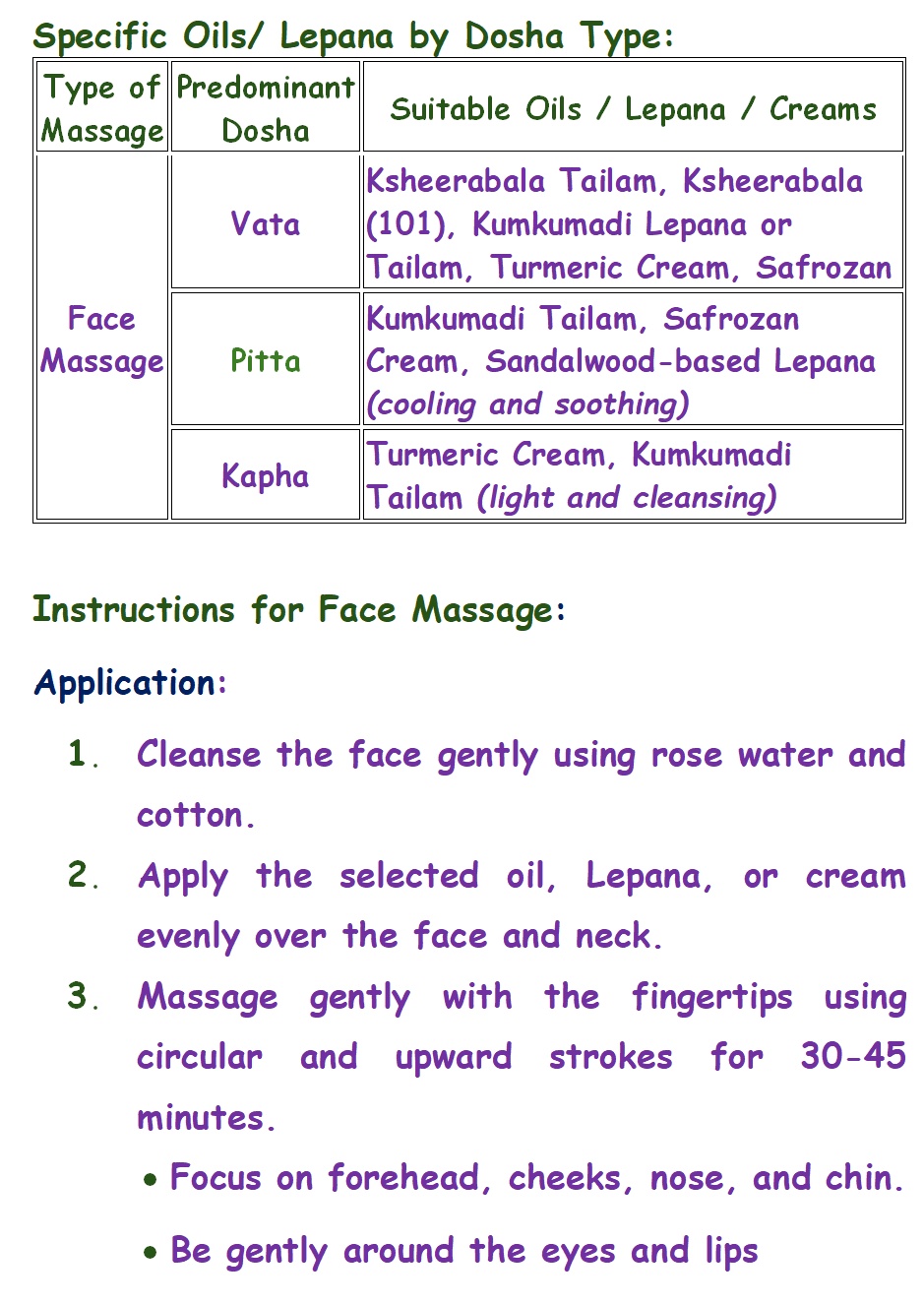
Ayurvedic Oils for Face
For Mukha Abhyanga, oils or Lepana (herbal paste) are chosen by skin type, dosha or specific condition:
- Vata — Ksheerabala Tailam, Ksheerabala (101), Kumkumadi Lepana or Tailam, Turmeric Cream, Safrozan.
- Pitta — Kumkumadi Tailam, Safrozan Cream, sandalwood-based Lepana (cooling and soothing).
- Kapha — Turmeric Cream, Kumkumadi Tailam (light and cleansing).
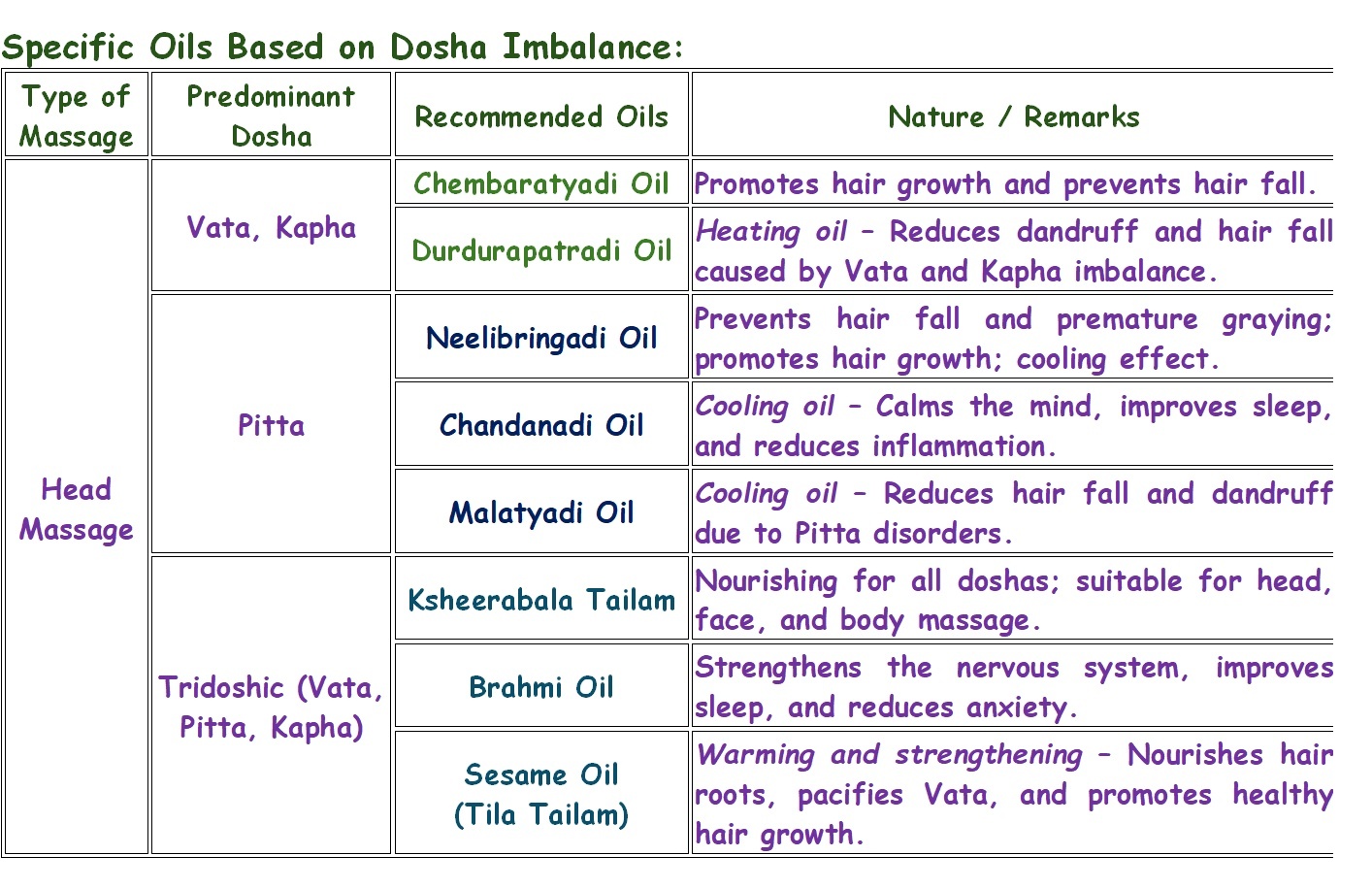
Ayurvedic Oils for Head
Ksheerabala oil and Sesame oil (Tila Tailam) are general-purpose oils suitable for regular head massage; specific oils are chosen for dosha imbalance:
- Vata, Kapha — Chembaratyadi Oil (promotes hair growth, prevents hair fall); Durdurapatradi Oil (heating, reduces dandruff and hair fall).
- Pitta — Neelibringadi Oil (prevents hair fall and premature greying, cooling); Chandanadi Oil (calms the mind, improves sleep); Malatyadi Oil (reduces hair fall and dandruff).
- Tridoshic — Ksheerabala Tailam (nourishing for all doshas); Brahmi Oil (strengthens the nervous system, improves sleep, reduces anxiety).
Ayurvedic Oils for Legs
Oil selection for Padabhyanga is based on Prakruti, Vikruti, season, age, lifestyle and the purpose of therapy:
- Sesame Oil (Tila Taila) — Vata; warming, nourishing and grounding.
- Coconut Oil (Narikela Taila) — Pitta; cooling and soothing.
- Mustard Oil (Sarshapa Taila) — Kapha; warming and stimulating.
- Ksheerabala Taila — nourishing and grounding, traditionally used for Vata-related conditions.
- Dhanwantharam & Mahanarayana Taila — traditionally used for muscular and joint support, stiffness.
Ayurvedic Oils for Back
Back massage draws on the same range of full-body oils, matched to your dosha — warming Sesame oil for Vata, cooling Coconut oil for Pitta, and stimulating Mustard or Eladi oil for Kapha — with Dhanwantharam or Mahanarayana Taila traditionally used for muscular and joint support. The right oil, pressure and technique are chosen individually after understanding your Deha Prakriti and current condition.
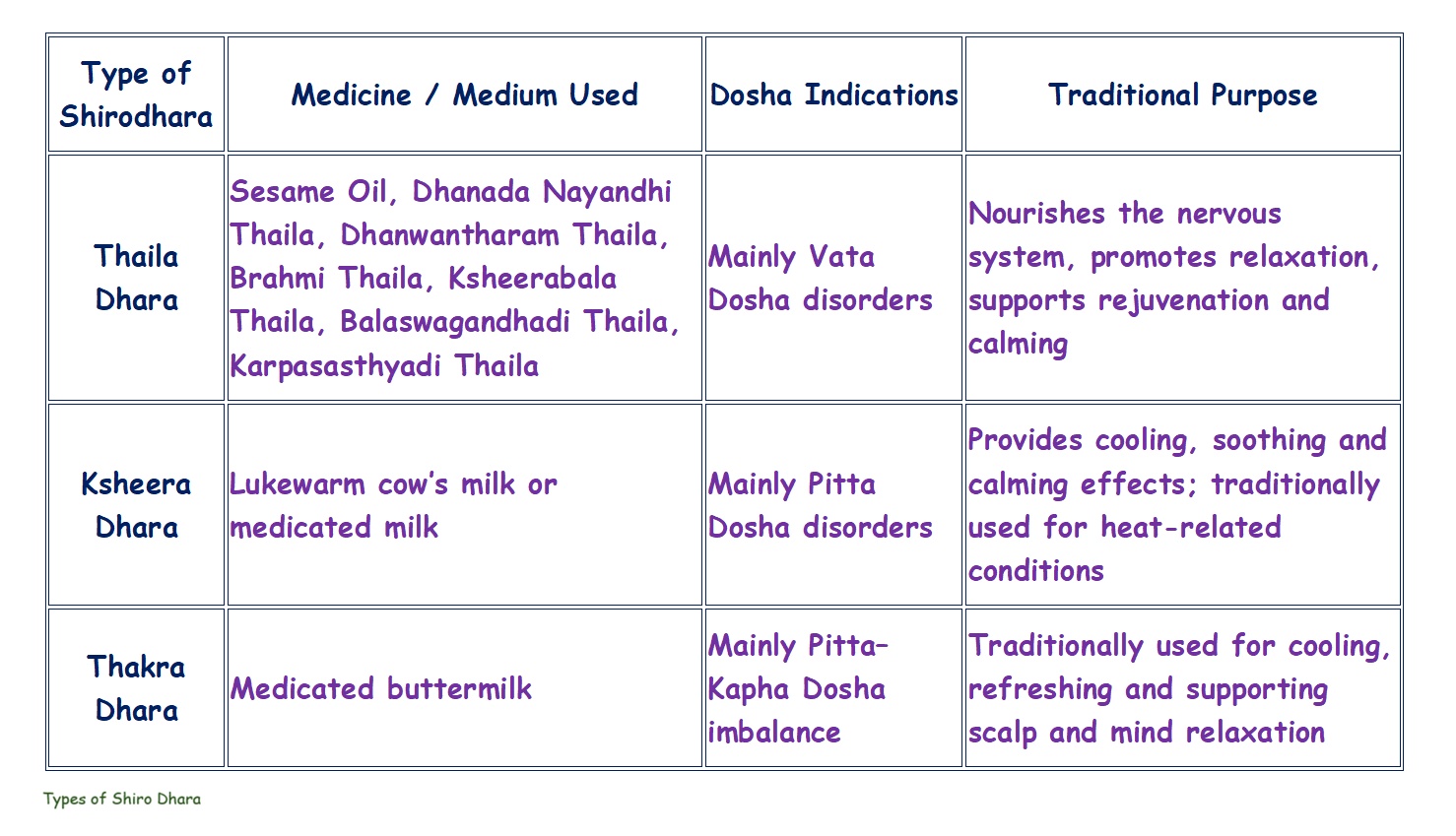
Ayurvedic Oils for Shiro Dhara
The type of Dhara and medicated liquid used is selected based on your Prakriti, dosha imbalance and health condition:
- Thaila Dhara (Sesame Oil, Dhanada Nayandhi, Dhanwantharam, Brahmi, Ksheerabala, Balaswagandhadi or Karpasasthyadi Thaila) — mainly for Vata dosha disorders; nourishes the nervous system, promotes relaxation and rejuvenation.
- Ksheera Dhara (lukewarm cow's milk or medicated milk) — mainly for Pitta dosha disorders; cooling, soothing and calming.
- Thakra Dhara (medicated buttermilk) — mainly for Pitta–Kapha imbalance; cooling, refreshing, supports scalp and mind relaxation.
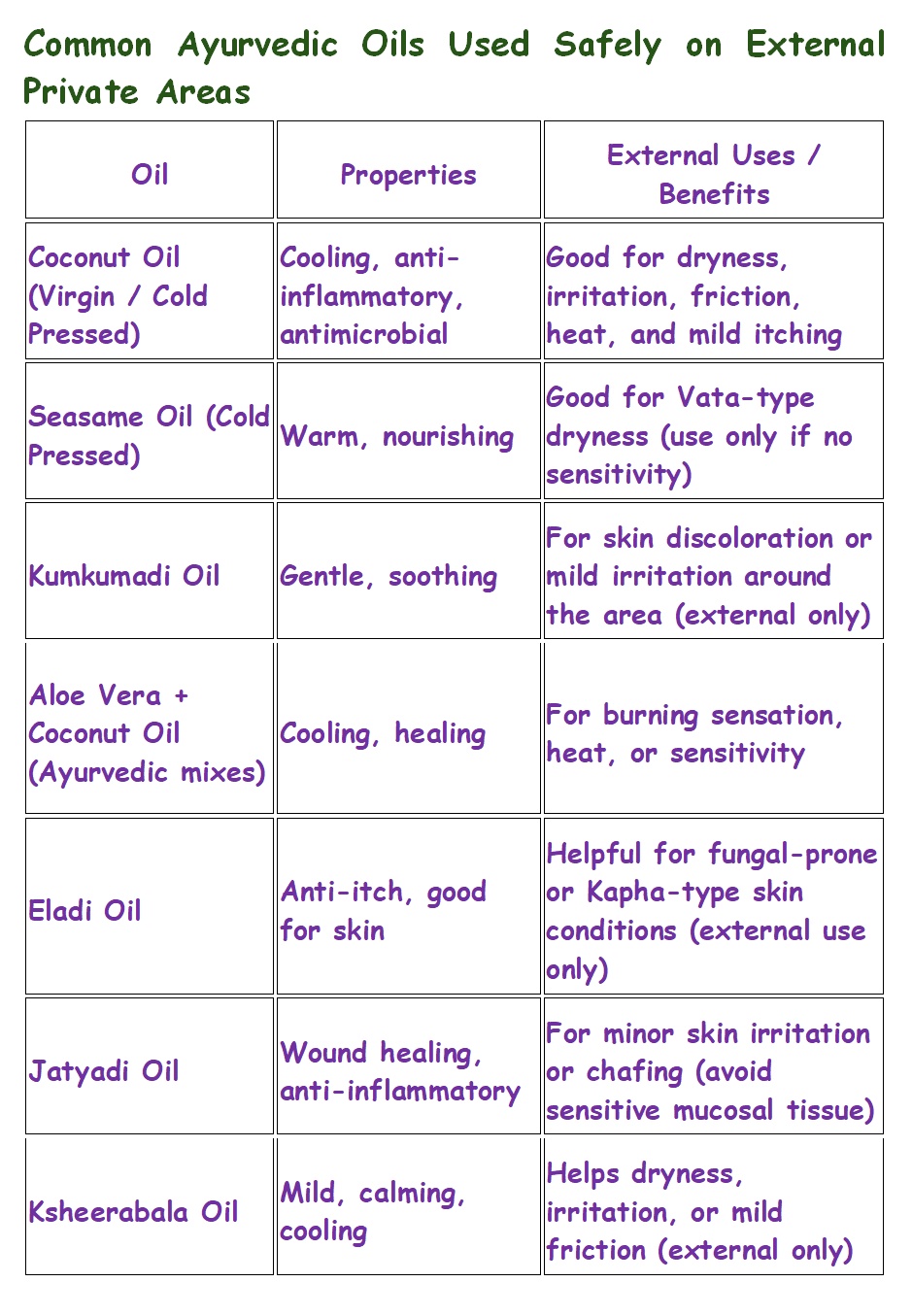
Oils for Private Parts
External Intimate-Area Care Only
Ayurveda allows the use of certain mild, soothing oils externally on the intimate region — for dryness, irritation, itching, or maintaining skin comfort. These oils must be pure, gentle, cooling and non-irritating, and are commonly used for dryness or chafing, irritation from friction, mild heat or burning sensation, post-partum perineal care (with guidance), and fungal-prone skin.
Gentle options traditionally used include Coconut Oil (cooling, anti-inflammatory, antimicrobial), Sesame Oil (warm, nourishing, for Vata-type dryness), Kumkumadi Oil (gentle, soothing), Aloe Vera + Coconut Oil (cooling, healing), Eladi Oil (anti-itch, for fungal-prone or Kapha-type skin) and Jatyadi or Ksheerabala Oil (wound healing and calming) — always external use only.
Important safety guidelines: use oils only on external skin, never inside the vagina, anus or urethra; avoid strong, heating or heavily medicated oils; patch-test on your wrist first; and discontinue immediately if you experience burning, itching, rash, discharge or pain. Seek medical care for persistent itching or discharge, strong burning, sores, pain or swelling, or symptoms lasting more than 2–3 days.
Given how personal and constitution-specific this is, we discuss the right oil, safe application and any further guidance — including gentle care for skin tone or sensitivity — only in a private consultation, never as a generic recommendation.
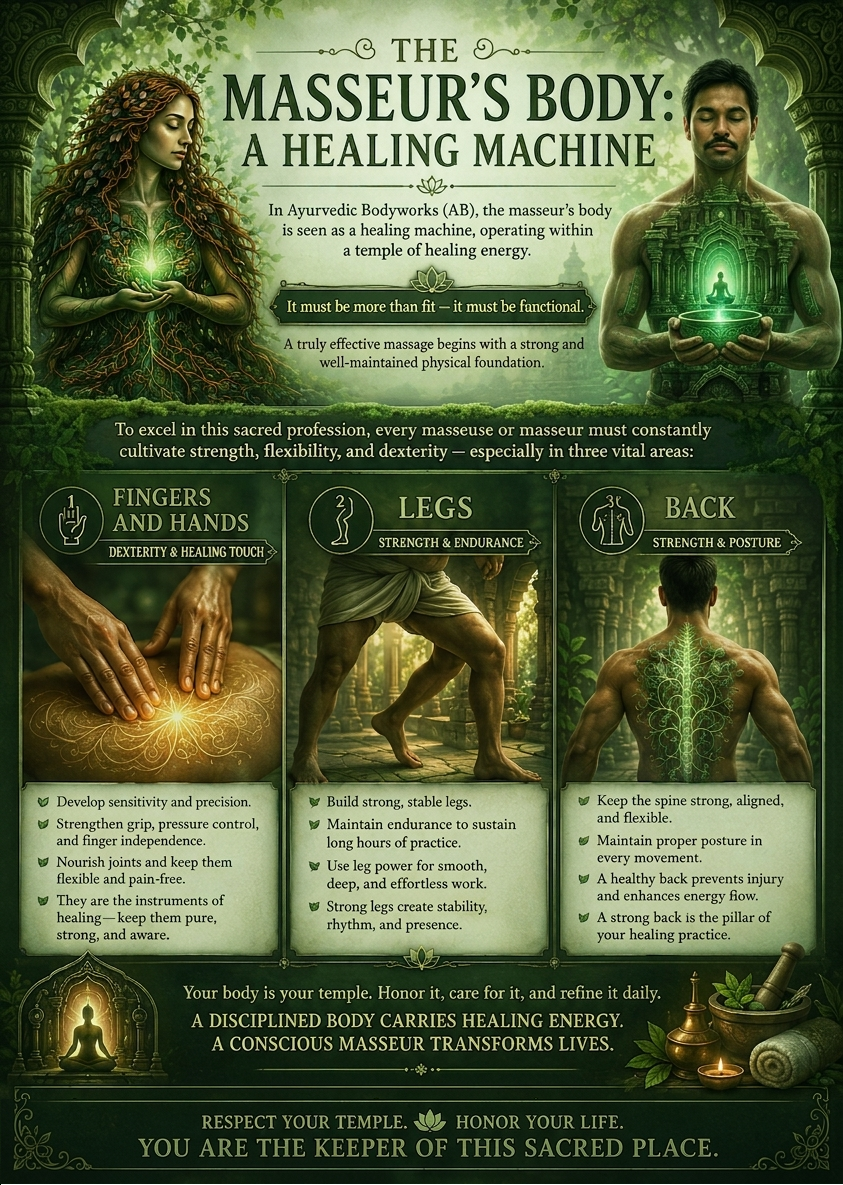
The Masseur's Body: A Healing Machine
In Ayurvedic Bodyworks, the masseur's body is seen as a healing machine, operating within a temple of healing energy — it must be more than fit, it must be functional. A truly effective massage begins with a strong, well-maintained physical foundation. To excel in this sacred profession, every masseuse or masseur must constantly cultivate strength, flexibility and dexterity — especially in three vital areas:
- Fingers & Hands — sensitivity and precision, strong grip, flexible and pain-free joints. The instruments of healing, kept pure, strong and aware.
- Legs — strength and endurance to sustain long hours of practice, and the stability and rhythm they bring to every stroke.
- Back — a strong, aligned spine and posture, the pillar of a healing practice and protection against injury.
"Your body is your temple. Honor it, care for it, and refine it daily."
The Power of Fingers & Hands in Ayurvedic Massage
In Abhyanga, the hands are invaluable instruments — they do more than apply pressure, they connect, respond and heal. The fingers and hands offer sensory feedback, allowing real-time adjustments in pressure, speed and direction; target specific areas for relief, balance and energy flow; and create a soothing, rhythmic touch that brings emotional and physical calm.
To strengthen the fingers & hands, massage professionals regularly strengthen and stretch the palms, knuckles, wrists, forearms and elbows.
Preparing the hands for massage. Before beginning, hands are rubbed together to warm them — this creates friction and heat, so oil or lotion spreads evenly and glides smoothly over the skin. Massage hands should always be clean and soft, short-nailed and well-trimmed, jewelry-free and polish-free, and well-oiled, warm and flexible.
The Importance of Legs in Ayurvedic Massage
After the hands, the legs are a masseur's foundation — providing stability for long periods of standing, support for body weight and fluid movement, and power and control for precise, grounded technique. Leg bones act as levers for muscle movement, while joints such as the knees and ankles provide flexibility; the calf muscles also aid circulation by pushing blood back toward the heart, essential during physical activity.
To strengthen the legs, focus on leg muscles, joints and circulatory flow — and apply Ayurvedic oil to the legs with regular self-massage, especially around the joints, to enhance flexibility and energy flow.
The Role of the Back in Ayurvedic Massage
A healthy back is essential for overall wellbeing and performance — it's the structural core of the massage therapist's body. It supports posture and bears weight during sessions, enables flexible movement including twisting and bending, protects the spinal cord that carries signals between brain and body, and houses major muscles such as the latissimus dorsi, trapezius and lower back stabilisers. The back muscles run from the neck, down the spine, and end just above the hips — a strong back provides stamina, spinal alignment and core support, all crucial for safe and effective massage work.
To strengthen the back, target the spinal column and joints, the major and minor back muscles (lats and trapezius), and core and postural stability.
Surya Namaskara: Ancient Practice for Modern Healers
Surya Namaskara (Sun Salutation) is one of the most powerful full-body practices for massage professionals — it increases overall body strength and flexibility, enhances circulation, breath awareness and alignment, and awakens energy pathways and internal balance.
How to practice: perform 12 sets daily (each set has 12 postures), ideally during sunrise for maximum benefit, and bathe in cool water beforehand to energise your cells and awaken bodily intelligence.
Self-Oleation: The Most Important Ritual
Before any massage session, a masseur oils their own body, especially the joints and limbs — this helps regulate internal and external body temperature, promotes flexibility, prevents strain and grounds your energy.
The masseur's body is a sacred tool — a healing machine that must be honoured, maintained and prepared each day. Through daily practice, intentional movement and self-care rituals, therapists ensure that their own body remains aligned with the healing work they offer to others.
A Masterpiece of Nature
Self-care is not a luxury — it's a necessity for healthy living and long-term wellness, at every stage of life.
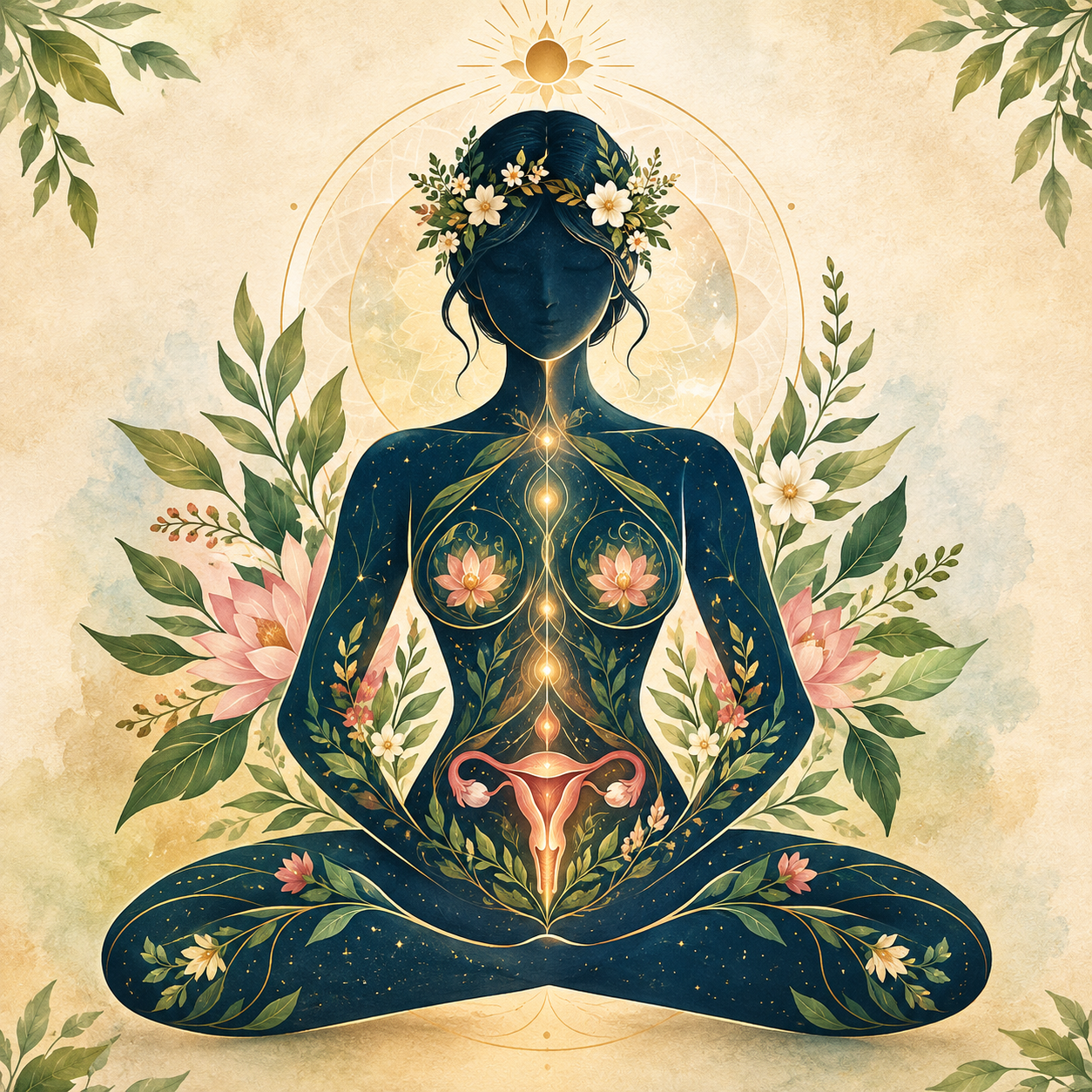
Women — The Unique Design of Nature
The structure of the female body is remarkably unique. A woman's body is designed not only for everyday physical functions, but also to support the complex processes of reproduction, pregnancy, childbirth and nurturing the next generation. Every part of the female body has its own structure, function and purpose — the reproductive system works in close relationship with hormones and other body systems, influencing different stages of a woman's life.
But the uniqueness of women is not limited to physical structure. Women also have their own psychological, emotional and behavioural characteristics, shaped by their individual constitution, experiences, environment, relationships and life circumstances. Rather than trying to understand everything about a woman, we can learn to observe, listen, respect, communicate and respond with awareness — every woman has her own needs, boundaries, preferences and ways of experiencing life. Do not assume. Do not generalise. Do not follow blindly — instead, build understanding through awareness, respect, compassion and mutual communication.
Women are not a formula to be understood. They are individuals to be respected, experienced and appreciated. Every woman is unique — a masterpiece of nature.
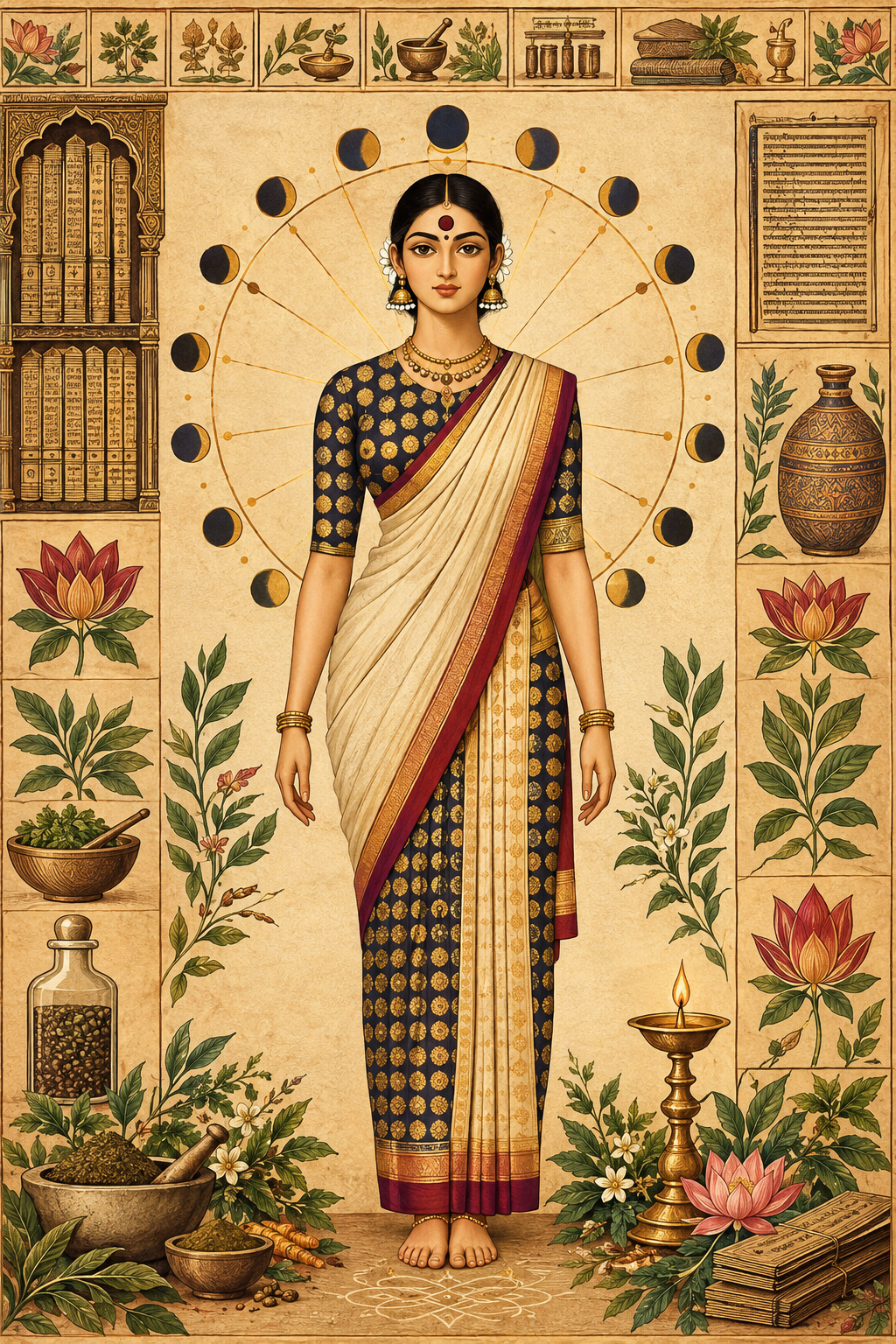
Why AYU Ayurveda for Women
Women naturally experience physical, emotional and hormonal fluctuations throughout life, and stress and exhaustion can accumulate over time. Relaxation helps calm the nervous system, reduce stress and mental fatigue, improve sleep, and support emotional and hormonal wellbeing. Rejuvenation matters because a woman's body moves through many natural stages — menstruation, pregnancy and childbirth, breastfeeding, hormonal change and menopause — each requiring nourishment, recovery and restoration.
Women often prioritise others before themselves, yet a woman's wellbeing shapes family health, emotional harmony at home and daily productivity. Regular self-care helps maintain strength, emotional resilience, better immunity, healthy sleep, confidence and quality of life — Ayurveda teaches that prevention is better than cure.
At AYU, caring for women begins with caring for the individual woman herself. When she understands her own body, mind and needs, she can make more informed choices for her wellbeing. Our approach brings together Ayurvedic Bodyworks (therapeutic touch and traditional techniques), Ayurvedic Lifestyle (sustainable daily habits), Nutrition & Daily Routine, Rest & Relaxation, and Self-care & Awareness — because when a woman is healthy, relaxed and well supported, her wellbeing positively influences her family and community too.
"We do not simply care for the woman's body. We encourage her to understand, care for and support her whole self." — AYU, Healing Through Tradition & Touch
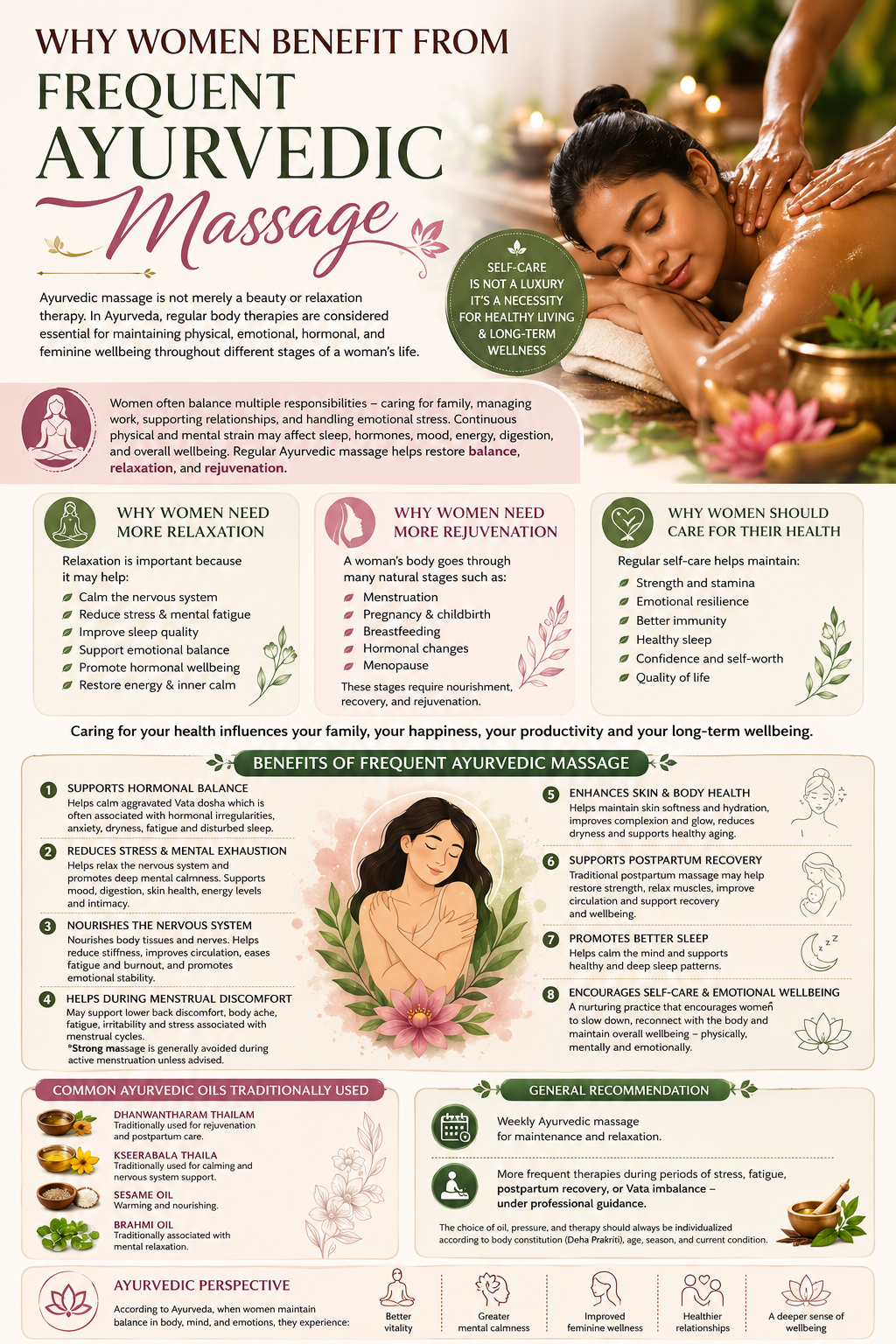
Why Women Benefit from Frequent Ayurvedic Massage
Ayurvedic massage is not merely a beauty or relaxation therapy — in Ayurveda, regular body therapies are considered essential for physical, emotional, hormonal and feminine wellbeing throughout every stage of a woman's life. Regular Abhyanga supports hormonal balance through menstruation, pregnancy, postpartum and menopause by calming aggravated Vata dosha — often linked to hormonal irregularities, anxiety, dryness, fatigue and disturbed sleep — and helps reduce stress and mental exhaustion from the many responsibilities women carry: work, home, caregiving and emotional support.
Frequent massage nourishes the nervous system, reducing stiffness, improving circulation and easing fatigue, and can gently support relief during menstrual discomfort — though strong massage is generally avoided during active menstruation unless specifically advised. It also enhances skin and body health, maintaining softness and hydration, and plays an important role in postpartum recovery, when the body is considered highly Vata-aggravated and depleted.
Common oils used traditionally include Dhanwantharam Thailam (rejuvenation and postpartum care), Ksheerabala Thaila (calming, nervous system support), warming Sesame oil and Brahmi oil for mental relaxation. Ayurveda generally recommends weekly massage for maintenance, with more frequent therapy during stress, fatigue, postpartum recovery or Vata imbalance — the choice of oil, pressure and therapy always individualised to your Deha Prakriti, age, season and current condition.
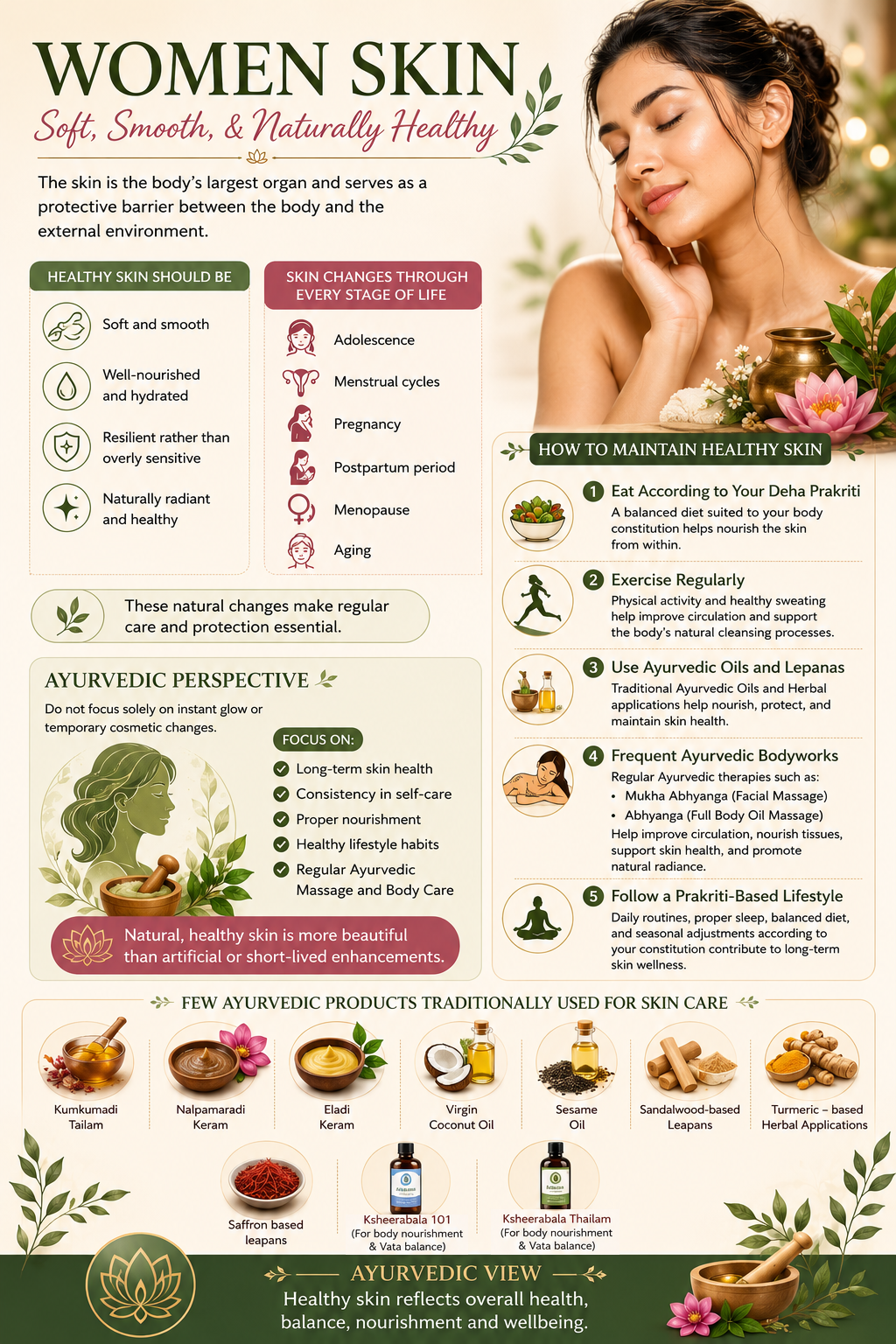
Women & Skin — Soft, Smooth & Naturally Healthy
The skin is the body's largest organ, a protective barrier between the body and the outside world. Healthy skin should be soft and smooth, well-nourished and hydrated, resilient rather than overly sensitive, and naturally radiant. Women's skin changes continuously — through adolescence, menstrual cycles, pregnancy, postpartum, menopause and ageing — and is also shaped by food habits, daily routine, sleep, stress and environment.
To maintain healthy skin: eat according to your Deha Prakriti, exercise regularly to support circulation and natural cleansing, use Ayurvedic oils and Lepanas suited to your skin, and follow a Prakriti-based lifestyle with proper sleep and seasonal adjustment. Frequent bodyworks — Mukha Abhyanga (facial massage) and full-body Abhyanga — improve circulation, nourish tissues and promote natural radiance.
Traditional preparations used for skin care include Kumkumadi Tailam, Nalpamaradi Keram, Eladi Keram, virgin coconut and sesame oils, sandalwood- and turmeric-based Lepanas, saffron Lepanas, and Ksheerabala 101 / Ksheerabala Thailam. The Ayurvedic view is simple: don't chase instant glow — healthy skin reflects overall health, balance, nourishment and wellbeing, built through consistency, not shortcuts.
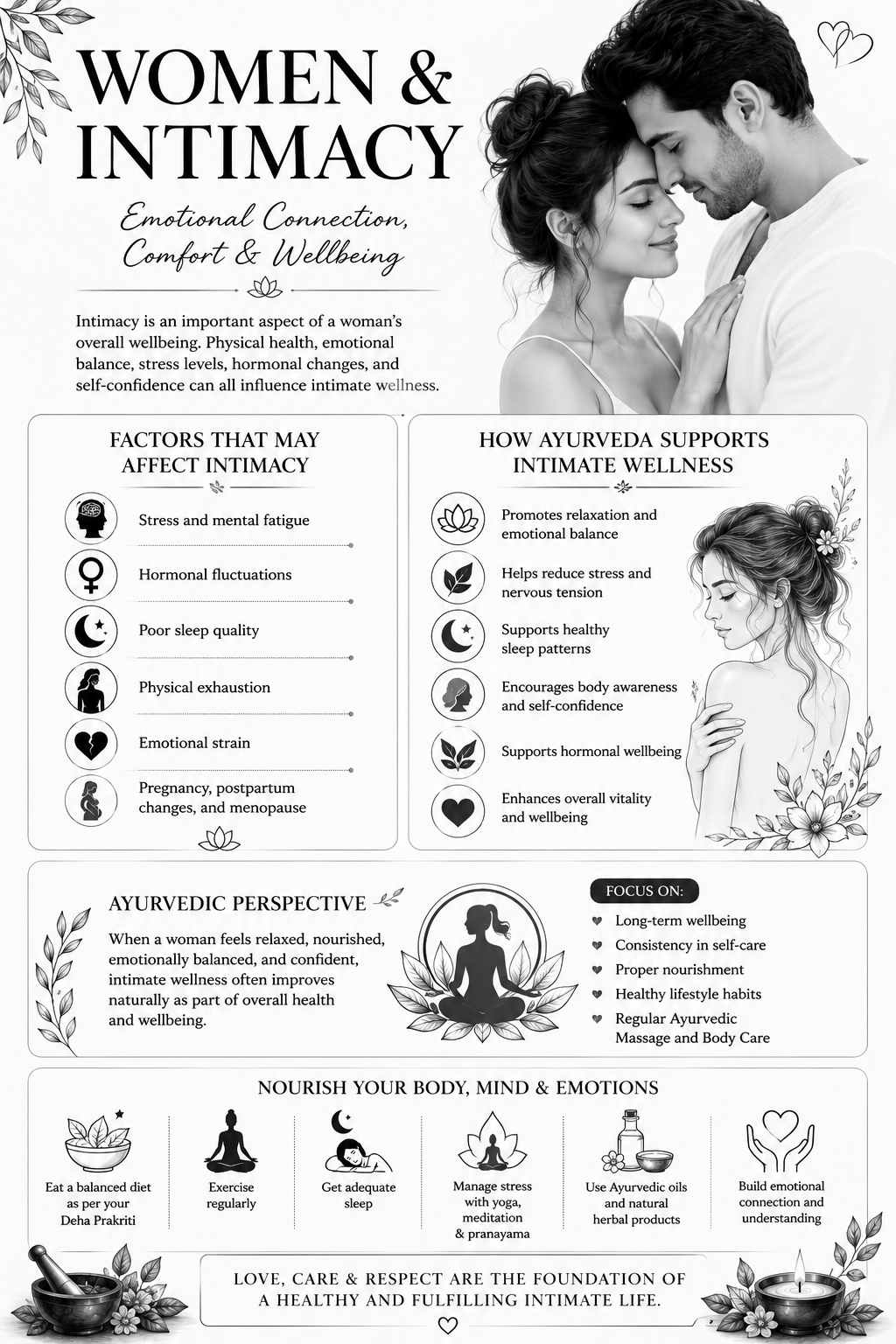
Women & Intimacy
Intimacy is an important aspect of a woman's overall wellbeing. It can be affected by stress and mental fatigue, hormonal fluctuations, poor sleep, physical exhaustion, emotional strain, pregnancy, postpartum changes and menopause, as well as everyday lifestyle habits and routine. Ayurveda supports intimate wellness by promoting relaxation and emotional balance, reducing stress and nervous tension, supporting healthy sleep, encouraging body awareness and self-confidence, and supporting hormonal wellbeing — all through a Deha Prakriti-based daily routine.
The female intimate area needs proper care and attention through every stage of life — menstruation, pregnancy, postpartum recovery and menopause. Key points: maintain proper intimate hygiene, wear comfortable breathable clothing, follow a balanced diet suited to your constitution, stay physically active, manage stress, seek timely care for discomfort, and prioritise adequate sleep and emotional wellbeing.
According to Ayurveda, intimate health is closely connected to overall physical, emotional, hormonal and reproductive wellbeing. Regular self-care, proper nourishment, healthy daily routines (Dinacharya) and adequate rest help maintain balance, comfort and confidence — when a woman feels relaxed, nourished and emotionally balanced, intimate wellness often improves naturally as part of overall health, a topic we discuss with care in a private consultation.
Women & Pregnancy
Before Pregnancy · During Pregnancy · After Pregnancy
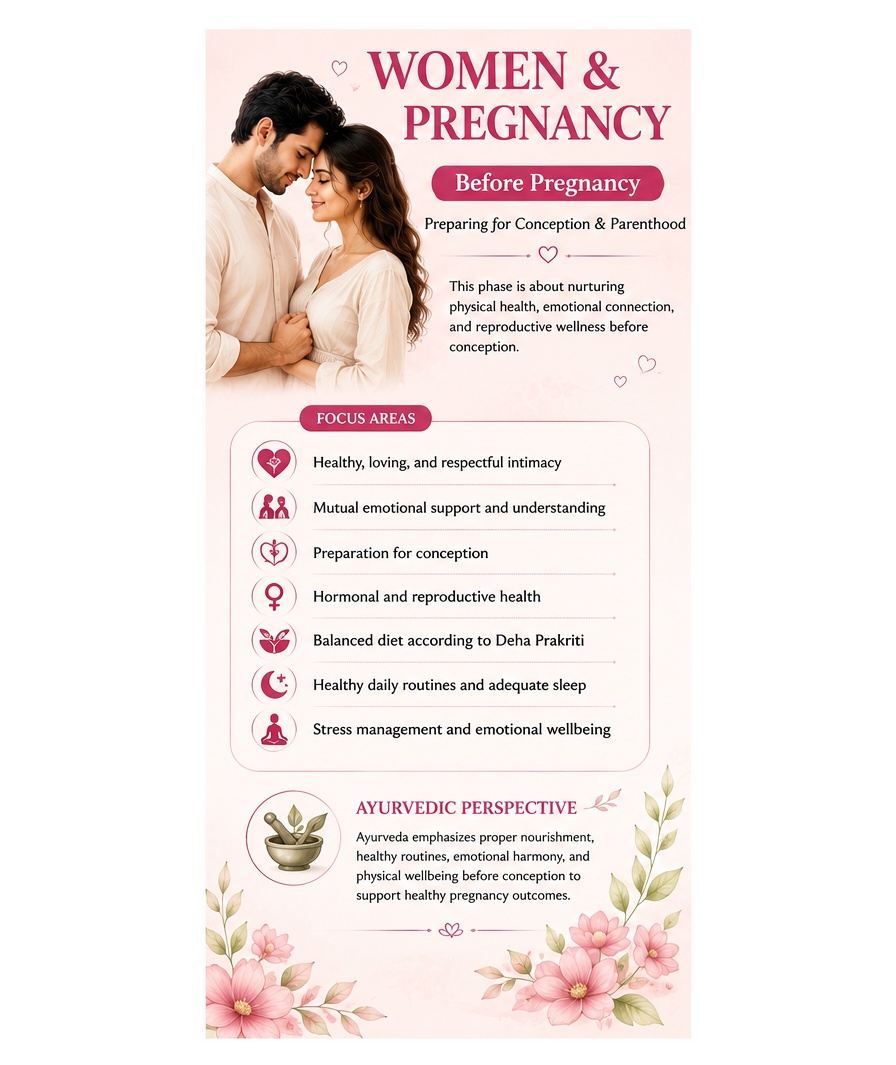
Before Pregnancy
Preparing for conception & parenthood — nurturing physical health, emotional connection and reproductive wellness: healthy and respectful intimacy, mutual emotional support, hormonal and reproductive health, a balanced diet suited to your Deha Prakriti, healthy routines and adequate sleep, and stress management, supporting a healthy pregnancy outcome.
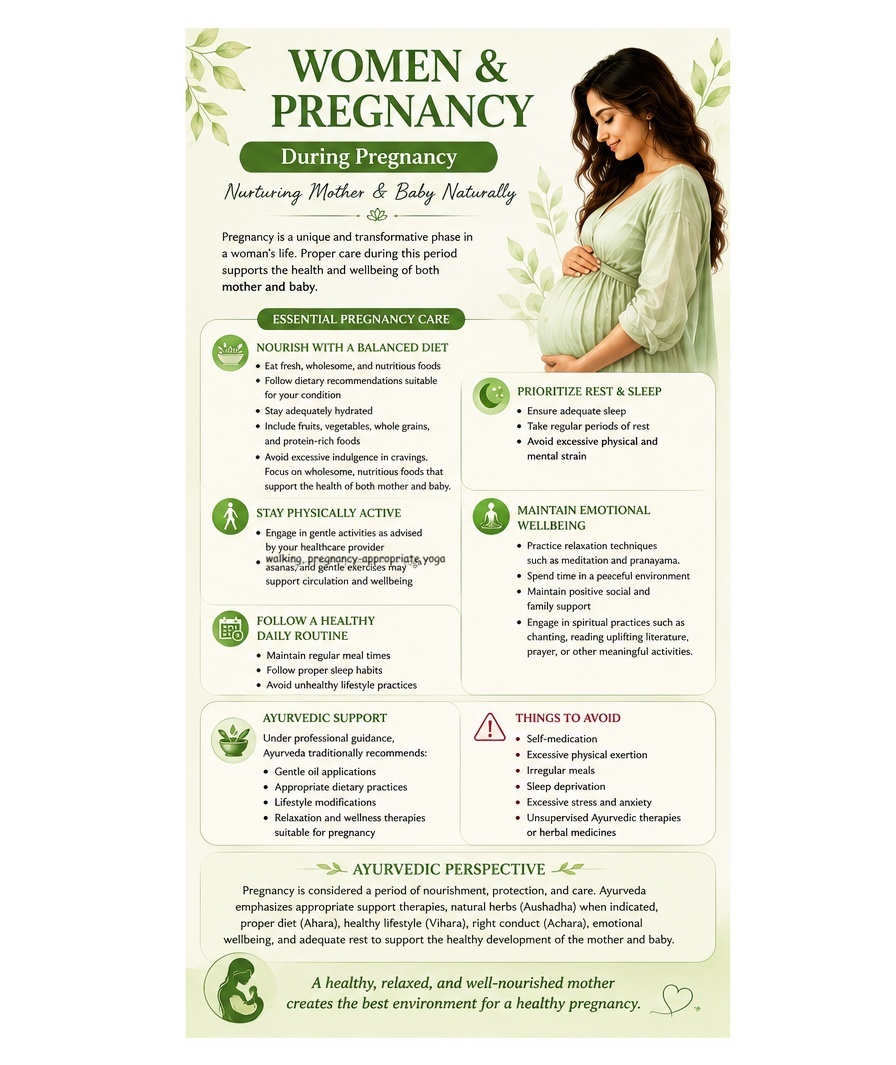
During Pregnancy
Nurturing mother & baby naturally — nourish with a balanced diet, prioritise rest and sleep, stay gently active with walking or pregnancy-appropriate yoga as advised by your healthcare provider, and maintain emotional wellbeing through meditation, pranayama and a peaceful environment. Under professional guidance, Ayurveda may offer gentle oil application and suitable lifestyle support — always avoiding self-medication, excessive exertion or unsupervised therapies.
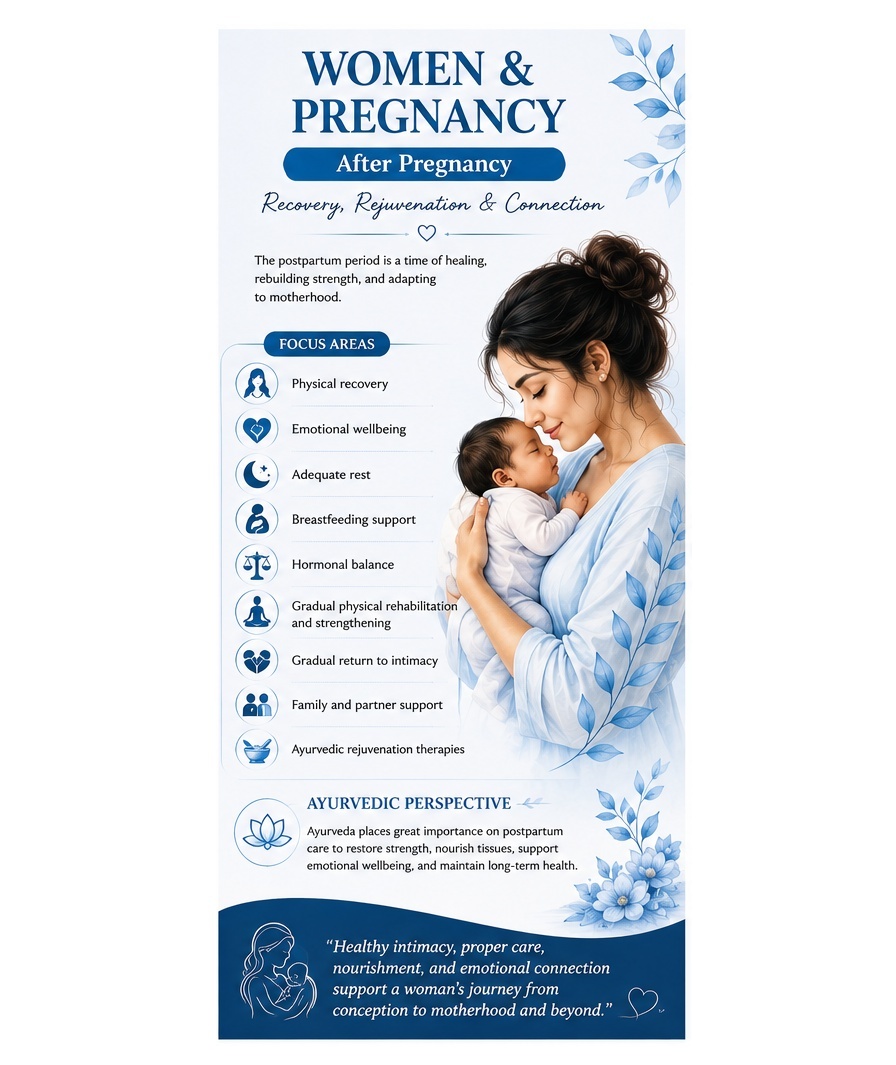
After Pregnancy
Recovery, rejuvenation & connection — the postpartum period is one of healing and rebuilding: physical recovery, emotional wellbeing, adequate rest, breastfeeding support, hormonal balance, gradual physical rehabilitation, a gradual return to intimacy, and family and partner support, alongside traditional Ayurvedic rejuvenation therapies. A healthy, relaxed and well-nourished mother creates the best environment for a healthy pregnancy.
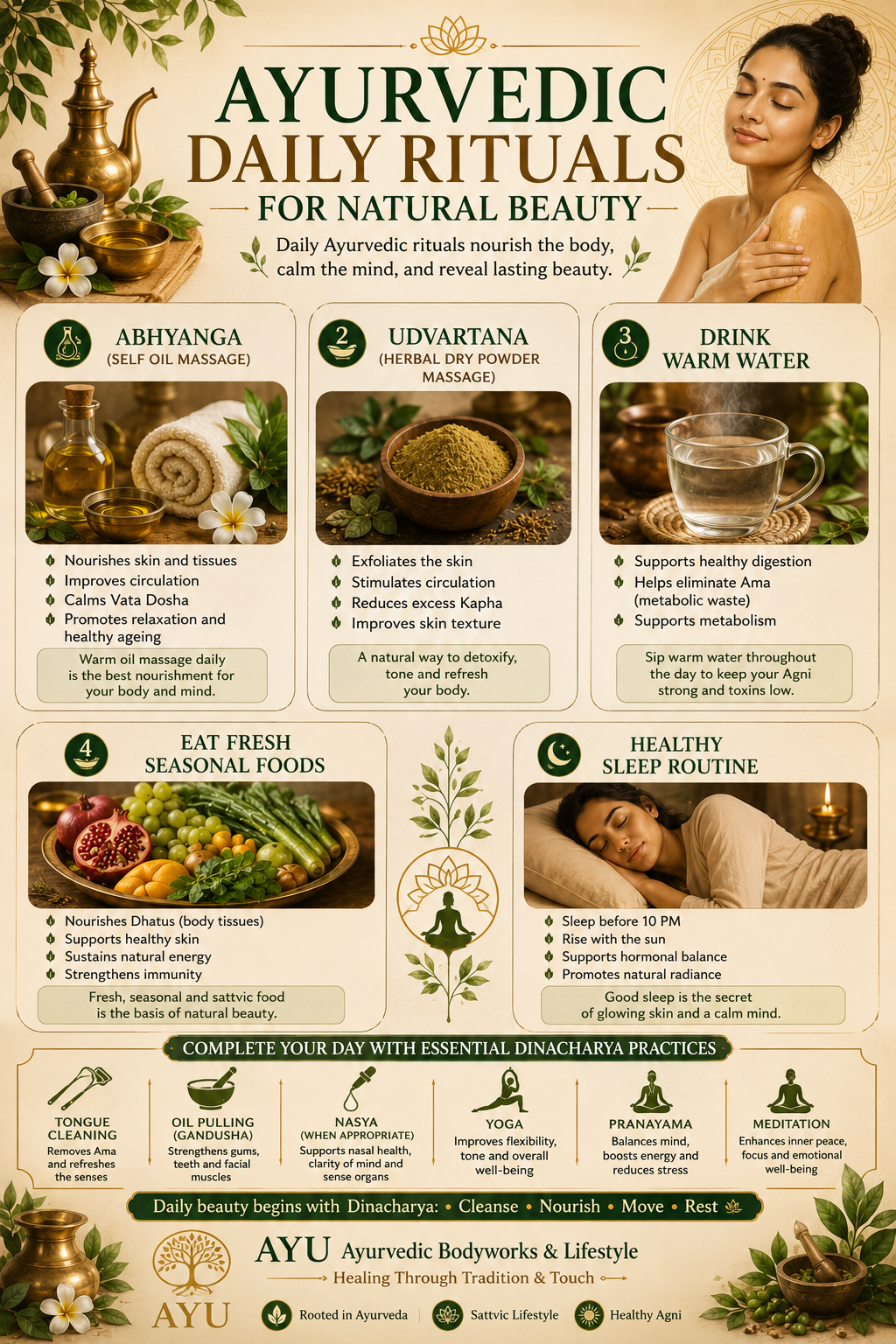
Daily Rituals & Beauty
Daily Ayurvedic rituals nourish the body, calm the mind and reveal lasting beauty — through simple, consistent practice rather than any single product. Abhyanga (self oil massage) nourishes skin and tissues, improves circulation, calms Vata dosha and promotes relaxation and healthy ageing. Udvartana (herbal dry powder massage) exfoliates the skin, stimulates circulation and reduces excess Kapha. Sipping warm water through the day supports digestion, helps eliminate Ama (metabolic waste) and keeps your Agni strong.
Fresh, seasonal foods nourish the body's tissues (Dhatus), support healthy skin and sustain natural energy, while a healthy sleep routine — sleeping before 10 PM and rising with the sun — supports hormonal balance and natural radiance. A complete day of Dinacharya also includes tongue cleaning, oil pulling (Gandusha), Nasya when appropriate, yoga, pranayama and meditation.
Daily beauty begins with Dinacharya: cleanse, nourish, move, rest.
Spending a Day at My Place
Relaxation · Rejuvenation · Self-Care — a peaceful and soulful day, exclusively for women seeking rest and renewal. My place is not a luxury retreat, but a simple, serene and charming wellness space where you can relax, unwind and reconnect with yourself. Every session is conducted with complete respect for your privacy, comfort and personal boundaries.

Sample Day Schedule (flexible to your comfort)

From Instagram
A glimpse into our therapies, training and lifestyle moments — follow @ayuayurvedicbodyworks for more.
Latest Videos
More Reels post regularly on Instagram — this section shows what's embedded here today; visit the profile for the full, always-current library.
Photos
Follow us on Instagram @ayuayurvedicbodyworks
Come back to yourself.
Consultations, therapies and training are available by prior appointment.